



Table of Contents
- What Makes a Car Phone Mount Handle Bumpy Roads
- Types of Mounting Mechanisms: Which Holds Best on Rough Roads
- Best Car Phone Mounts for Bumpy Roads: Top Picks Compared
- Heavy Duty Car Phone Mount: What to Look For
- MagSafe Car Mount for Off-Roading: Does Magnetic Hold Up?
- How to Secure Your Phone in the Car for Rough Roads
- Adjustability, Viewing Angles, and Ergonomic Positioning
- Conclusion
Last Updated: August 29, 2026
Finding the best car phone mount for bumpy roads is harder than it looks. Most mounts perform fine on smooth highways, but hit washboard roads or gravel, and a weak mount will rattle, slip, or drop your phone entirely. CarNook has put together this guide to help drivers find a mount that holds firm on rough terrain, whether that means a rutted back road, a potholed city street, or an off-road trail.
Quick Picks:
- Best for Dashboard Stability: CarNook DashGrip Phone Mount, firm adhesive base, compatible with nearly every vehicle
- Best for Image Stabilization: CarNook MagClip Phone Holder, ABS and silicone construction designed to absorb vibration
- Best Heavy-Duty Build: CarNook SecureRide Phone Mount, CNC aluminum alloy body, supports phone widths from 55mm to 100mm
What Makes a Car Phone Mount Handle Bumpy Roads
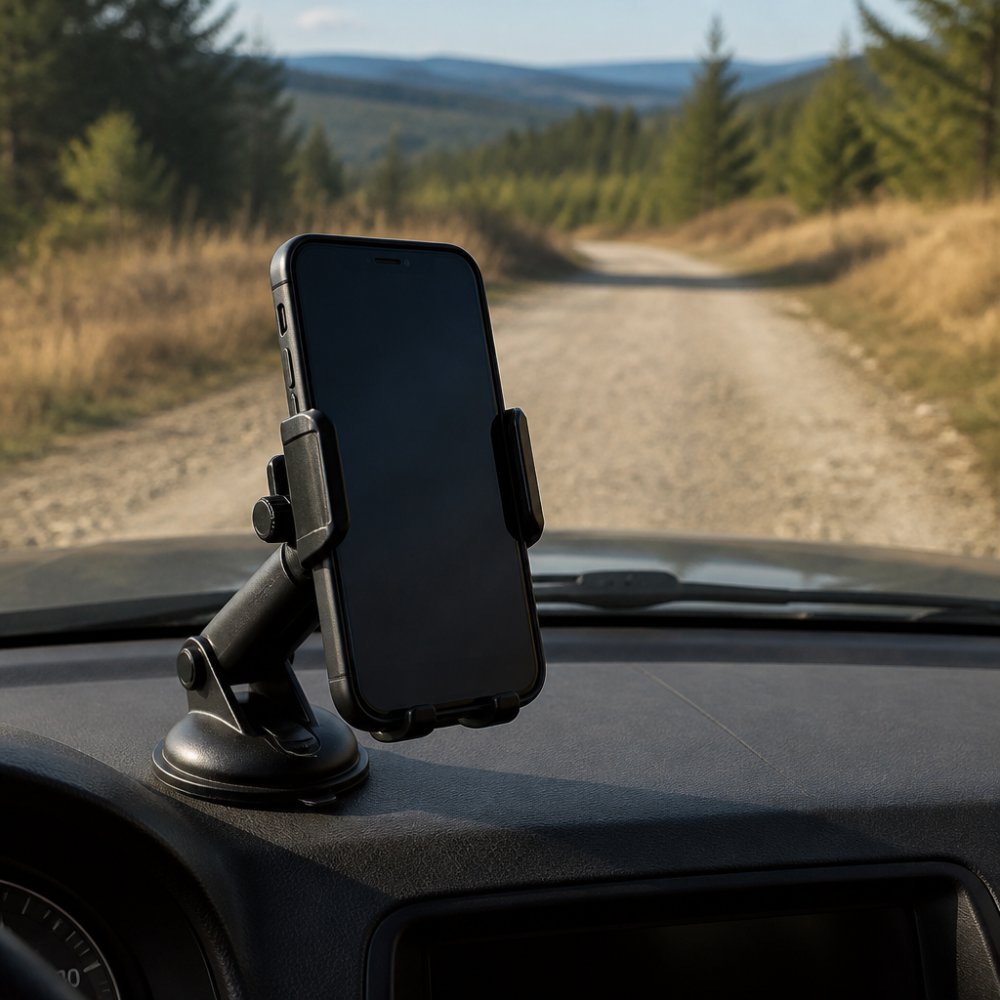
A car phone mount is only as good as its ability to resist vibration. On rough terrain, the difference between a good mount and a bad one becomes obvious within the first mile.

Clamping Force and Locking Mechanisms
The locking mechanism is the single most important factor for rough-road performance. Spring-loaded clamps vary significantly in tension, weak springs allow the cradle to flex and bounce with every bump. Mounts with adjustable tension or a dedicated locking lever maintain clamping force far better over time. A ball-and-socket joint must lock firmly enough that vibration cannot shift position. Base stability matters equally: look for mounts with wide adhesive pads, heavy-duty suction cups with a locking lever, or vent clips with multiple tension points.
Vibration Dampening and Shock Absorption
Vibration dampening separates a mount designed for rough roads from one designed for smooth pavement. Mounts built with silicone padding inside the phone cradle absorb high-frequency road noise before it reaches the device. Ruggedized mounts incorporate shock absorption at multiple points: the base, the articulating arm, and the cradle itself. An aluminum alloy body, like the CarNook SecureRide, resists flex under load while staying light enough not to add excessive torque to the mounting surface. According to NHTSA's guidelines on driver distraction and device mounting, secure phone mounting is directly tied to safe hands-free navigation, making stability a safety issue.

Types of Mounting Mechanisms: Which Holds Best on Rough Roads
Not every mounting type performs equally on rough terrain. The three most common options each have real trade-offs when it comes to vibration resistance and base stability.
Dashboard Mounts
Dashboard mounts attach directly to the dash surface using a strong adhesive pad or suction cup with a locking mechanism. This mounting surface is the most stable option for rough roads because the dash is a rigid structure connected directly to the vehicle frame. High-quality dashboard mounts use 3M-grade adhesive or gel pads that can be cleaned and reused. For off-road use or long-term installation, a dashboard mount is generally the best choice.
Windshield Suction Cup Mounts
Suction cup mounts attach to the windshield using a vacuum seal. A well-designed cup with a locking lever can hold several pounds of force, but heat degrades the seal over time. On rough roads, suction cup mounts work best when the cup is large, the locking lever creates a true vacuum seal, and the articulating arm is short. A long arm increases torque applied to the suction cup every time the vehicle hits a bump, accelerating failure.
Vent Clip Mounts
Vent clip mounts attach to HVAC vents and are the easiest to install and remove. The trade-off is that vent clip tension is often the weakest link. On bumpy roads, the clip can work loose from the vent slats, especially on vehicles with narrower vent fins. Vent mounts also position the phone closer to air conditioning or heating output, which accelerates heat degradation of both the mount's plastic components and the phone itself. For occasional use on paved roads, vent clips are convenient. For consistent rough-road use, they are the least reliable option.
Mount Type |
Base Stability |
Vibration Resistance |
Installation Ease |
Best For |
|---|---|---|---|---|
Dashboard |
High |
High |
Moderate |
Off-road, daily rough commutes |
Windshield Suction Cup |
Medium |
Medium |
Easy |
General use, smooth to moderate roads |
Vent Clip |
Low |
Low |
Very Easy |
Light use, smooth roads |
Best Car Phone Mounts for Bumpy Roads: Top Picks Compared
The three CarNook mounts below cover different priorities: base stability, vibration absorption, and heavy-duty construction.
1. CarNook DashGrip Phone Mount, Best for Dashboard Stability
The CarNook DashGrip Phone Mount is the top pick for drivers who want a permanent, stable mounting solution on the dashboard. It is compatible with 99% of vehicle models and mounts directly to the dash surface, giving it the rigid base that rough roads demand. The DashGrip's dashboard bracket design keeps the phone close to the driver's sightline, reducing the arm length that would otherwise amplify vibration.
Best for: Daily commuters on rough urban roads and drivers who want a set-it-and-forget-it installation.
Pros:
- Dashboard mounting surface provides the highest base stability
- Compatible with nearly all vehicle models
- Clean, low-profile design
Cons:
- Requires a suitable flat or slightly curved dashboard surface
- Not tool-free removal if permanent adhesive is used
2. CarNook MagClip Phone Holder, Best for Vibration Absorption
The CarNook MagClip Phone Holder is built from ABS plastic and silicone, a material combination specifically suited to absorbing road vibration. The silicone components act as a buffer between the phone and the rigid mount structure, reducing high-frequency shock that causes phones to shift or fall on rough terrain. Its image stabilization function makes it particularly useful for drivers who use their phone for navigation video or dashcam mirroring.

Best for: Drivers on moderately rough roads who want vibration dampening without sacrificing quick phone removal.
Pros:
- ABS and silicone construction absorbs vibration at the cradle level
- Universal compatibility works with most phone cases
- Image stabilization function reduces blur during rough-road navigation
Cons:
- Magnetic alignment requires compatible phone or magnetic plate
- Silicone surfaces can attract dust over time
3. CarNook SecureRide Phone Mount, Best Heavy-Duty Build
The CarNook SecureRide Phone Mount is the most ruggedized option in the CarNook lineup. Its CNC aluminum alloy body is high-strength, lightweight, and oxidation-resistant, making it the right choice for drivers who need a mount that can take punishment over time without degrading. The SecureRide supports phone widths from 55mm to 100mm, covering virtually every current smartphone on the market.
Best for: Off-road drivers, cyclists, and anyone who needs a mount that handles sustained vibration and extreme conditions.
Pros:
- CNC aluminum alloy body resists flex, fatigue, and oxidation
- Supports phone widths from 55mm to 100mm
- High-strength construction handles sustained rough-road vibration
Cons:
- Heavier than plastic mounts, which adds slight torque to the mounting point
- Aluminum finish may not suit all interior aesthetics
Heavy Duty Car Phone Mount: What to Look For
A heavy duty car phone mount needs to pass two tests that most standard mounts ignore: weight capacity under dynamic load and resistance to long-term heat degradation.
Weight Capacity and Device Compatibility
Weight capacity is rarely listed on standard car phone mounts, but it matters on rough roads. A phone sitting in a mount experiences far more effective force than its static weight when the vehicle hits a bump. Device compatibility goes beyond just phone width. Thick cases, battery cases, and rugged cases all add to the phone's dimensions and weight. A mount rated for a 100mm phone width, like the CarNook SecureRide, accommodates most phones even with a standard case attached.
Long-Term Heat Degradation
Long-term heat degradation is one of the most overlooked factors in car phone mount selection. Plastic mounts left in a vehicle during summer months are exposed to temperatures that can soften and deform mounting components over time. Aluminum alloy construction, as used in the SecureRide, resists thermal deformation far better than standard ABS plastic. For drivers in hot climates or those who leave their vehicle parked in direct sunlight regularly, thermal resistance is a practical specification.
MagSafe Car Mount for Off-Roading: Does Magnetic Hold Up?
Magnetic car mounts, including MagSafe-compatible designs, use magnetic alignment to hold the phone in place rather than mechanical clamping. Strong magnets with proper alignment can hold a phone securely through normal road vibration and moderate bumps. On severe off-road terrain with sustained heavy jolts, a mechanical clamping mechanism provides more reliable retention.
For most drivers dealing with rough urban roads, gravel paths, or light off-road use, a MagSafe car mount for off-roading is a practical and convenient option. The one-handed operation advantage is real: dropping the phone onto the magnetic mount is faster and simpler than opening a spring-loaded clamp. For extreme off-road use, pairing a magnetic mount with a secondary retention clip adds meaningful security. Standard MagSafe-compatible magnets are designed to work with the phone's internal magnet array and do not interfere with battery function or wireless charging performance when properly aligned.
How to Secure Your Phone in the Car for Rough Roads
Knowing how to secure a phone in the car for rough roads goes beyond just buying the right mount. Installation technique and surface selection make a significant difference in real-world performance.
Choosing the Right Mounting Surface
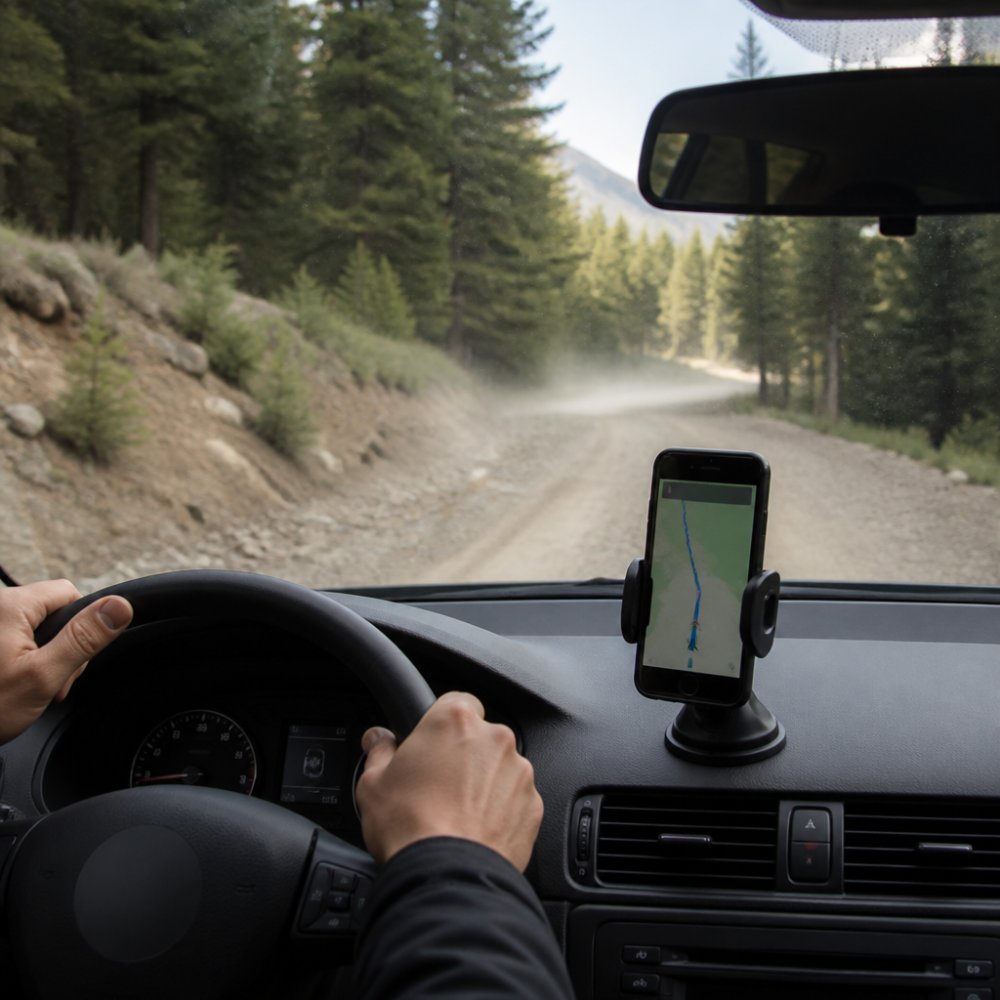
The mounting surface determines the ceiling of stability for any mount. A dashboard mount installed on a textured, flexible plastic surface will perform worse than the same mount on a firm, flat surface. Before installing, press firmly on the intended mounting location. If the surface flexes noticeably, choose a different spot or a different mount type. For suction cup mounts, the windshield offers the most consistent, non-porous surface. Clean the glass thoroughly before applying the suction cup.
Installation Tips for Maximum Stability
Proper installation takes five minutes but makes a meaningful difference in long-term performance. Follow these steps for any mount type:
- Clean the mounting surface with isopropyl alcohol and allow it to dry completely before applying adhesive or suction cups
- For adhesive dashboard mounts, apply firm pressure for at least 60 seconds and allow 24 hours before loading the mount with a phone
- Position the mount so the articulating arm is as short as possible while still providing a clear viewing angle
- Lock the ball-and-socket joint firmly before driving. Test by pushing the phone sideways with moderate force
- For vent clip mounts, verify the clip grips at least two vent fins and that the fins do not flex when the phone is loaded
- Re-check all locking mechanisms after the first rough-road drive, as initial vibration can settle components
Adjustability, Viewing Angles, and Ergonomic Positioning
Ergonomic positioning is not just about comfort. A poorly positioned phone forces the driver to take their eyes further off the road to check navigation, increasing distraction time. A 360-degree rotation capability at the mount head is the minimum standard for a useful car phone mount. This allows switching between portrait and landscape orientation for navigation apps without reinstalling the mount.
The pivot point between the arm and the base should lock independently from the head rotation. For hands-free navigation, the ideal phone position is just below the driver's natural horizon line, slightly to the right of center on the steering wheel. This minimizes eye travel distance and keeps the road visible above and around the device. Shorter glance durations toward in-vehicle displays are directly correlated with lower crash risk, making correct mount positioning a practical safety measure.
Feature |
Why It Matters on Rough Roads |
|---|---|
360-degree rotation |
Allows orientation changes without reinstalling |
Ball-and-socket joint with locking knob |
Holds position under sustained vibration |
Short articulating arm |
Reduces torque on base during impacts |
Silicone cradle lining |
Absorbs vibration at the device contact point |
Aluminum alloy body |
Resists flex and heat degradation over time |
Wide adhesive base |
Distributes load across a larger mounting surface |
Ready to upgrade your rough-road setup? Explore CarNook's full lineup of car phone mounts, MagSafe accessories, and device organization products to find the perfect fit for your vehicle and driving conditions.
Frequently Asked Questions
Is it better to put a phone mount on the dashboard or windshield for bumpy roads?
Dashboard mounts generally outperform windshield suction cup mounts on rough terrain. A dashboard mount sits on a flat, rigid surface with a lower center of gravity, which reduces the arc of vibration your phone experiences. Suction cups on windshields work well on smooth roads, but the extended articulating arm amplifies movement on washboard roads or off-road terrain. If you drive frequently on poor-quality roads, a dashboard mount with a strong adhesive or weighted base is the more stable choice.
Do magnetic phone mounts hold up on bumpy roads?
A quality MagSafe car mount can hold a phone securely on moderately rough roads, but performance depends on magnet strength and the mount's base stability. Mounts built specifically for off-roading use stronger magnetic alignment systems paired with a ruggedized base. On severe washboard roads or off-road terrain, a spring-loaded mechanical cradle adds a physical backup to the magnetic hold. For most daily commuters hitting potholes or gravel roads, a well-built magnetic mount handles the job without dropping your device.
Are vent-mounted phone holders secure enough for rough terrain?
Vent clip mounts are convenient but rank lowest for vibration resistance on rough roads. Vent clip tension depends on the vent blade's grip, which can loosen over time or flex under repeated impact. On highway potholes or dirt roads, vent-mounted holders are more likely to tilt or detach than dashboard or windshield options. They work acceptably for smooth urban commutes, but if bumpy roads are a regular part of your drive, a dashboard or suction cup mount with a locking mechanism is a more reliable choice.
What features should I look for in a phone mount for off-road driving?
Prioritize a heavy-duty construction with a ball-and-socket joint that locks firmly at your chosen angle. Look for a spring-loaded or screw-tightened phone cradle that holds devices 55-100mm wide. A ruggedized base with strong adhesive or suction cup integrity matters most on off-road terrain. Thermal resistance is also worth checking: mounts left in a hot car can soften over time, causing the adhesive or plastic pivot point to fail. Shock absorption built into the arm helps reduce the vibration your phone experiences on washboard roads.
Where is the safest place to mount a phone holder to minimize vibration?
The center of the dashboard, close to the base of the windshield, gives the best combination of stability and sightline. This position keeps the mount arm short, which reduces the lever effect that amplifies road vibration. Avoid mounting on the far edges of the dash where dashboard flex is greater. For hands-free navigation, positioning the phone at eye level without blocking your forward sightline is both the safest ergonomic position and the one that minimizes the visual distraction caused by a vibrating screen.