


⚡ Free Express Shipping in USA✦
🔥 Newest Arrival Collection Live Now✦
✨ SUBSCRIBE TO GET YOUR 10% Off✦

Last Updated: November 4, 2026
Quick Summary
To clean a slim iPhone case, remove it from the phone and wash it with a drop of mild dish soap in lukewarm water, using a microfiber cloth and a soft-bristle toothbrush for seams and cutouts. Rinse with clean water, pat dry, and let it air dry fully before reinstalling. Clean weekly with mild soap and sanitize occasionally with a 70% isopropyl alcohol wipe.
A slim iPhone case sits against your palm, your pocket lining, and your car's cup holder all day. That thin layer of TPU or polycarbonate collects skin oil, lint, and grit faster than a bulky case because there is less material to absorb the wear. A case that looks clean at first can show a dull film after a few weeks of daily use.
The good news is that thin cases are usually easier to clean than thicker ones. Wirecutter's 2026 iPhone case testing notes that the thinnest cases are often simpler to maintain than older standard designs.
Here is the core idea behind every step below: a slim iPhone case is a thin synthetic shell, and thin shells show residue, discoloration, and edge wear sooner than thick ones. Clean it gently and often, and it stays clear and grippy.
Below, we'll show you exactly how to clean a slim iPhone case without cracking the shell, clouding clear plastic, or wearing down the finish.
Start by taking the case off the phone. A slim case flexes, so peel from one corner and work around the edges slowly. Pulling hard from the middle can stress the thin side walls.
Next, clear the openings. Dust and pocket lint pack into the port cutouts, speaker grilles, and camera ring. A dry soft-bristle toothbrush works well here. Brush outward, not inward, so debris comes out instead of lodging deeper.
Check the seams and grooves before washing. Grit trapped in a seam can scratch the case's inner surface once water and motion get involved. A quick dry brush now saves you scrubbing later.
One more step: note the material. Flip the case over and look for a label or product page. TPU, silicone, polycarbonate, and leather-style finishes each react differently to cleaners, and that difference matters in the sections below.
The best cleaning supplies for phone cases are simple: mild dish soap, lukewarm water, a microfiber cloth, and a soft-bristle toothbrush. Harsh chemicals and abrasive pads are generally best avoided, since they can dull a finish or leave fine scratches.
Keep this kit small. A slim case does not need a cabinet of products, and more cleaners usually means more chances to damage the material.
One rule ties the whole kit together: use the gentlest option that works. Start with soap and water. Move up to alcohol or a baking soda paste only when a stain resists the mild approach.
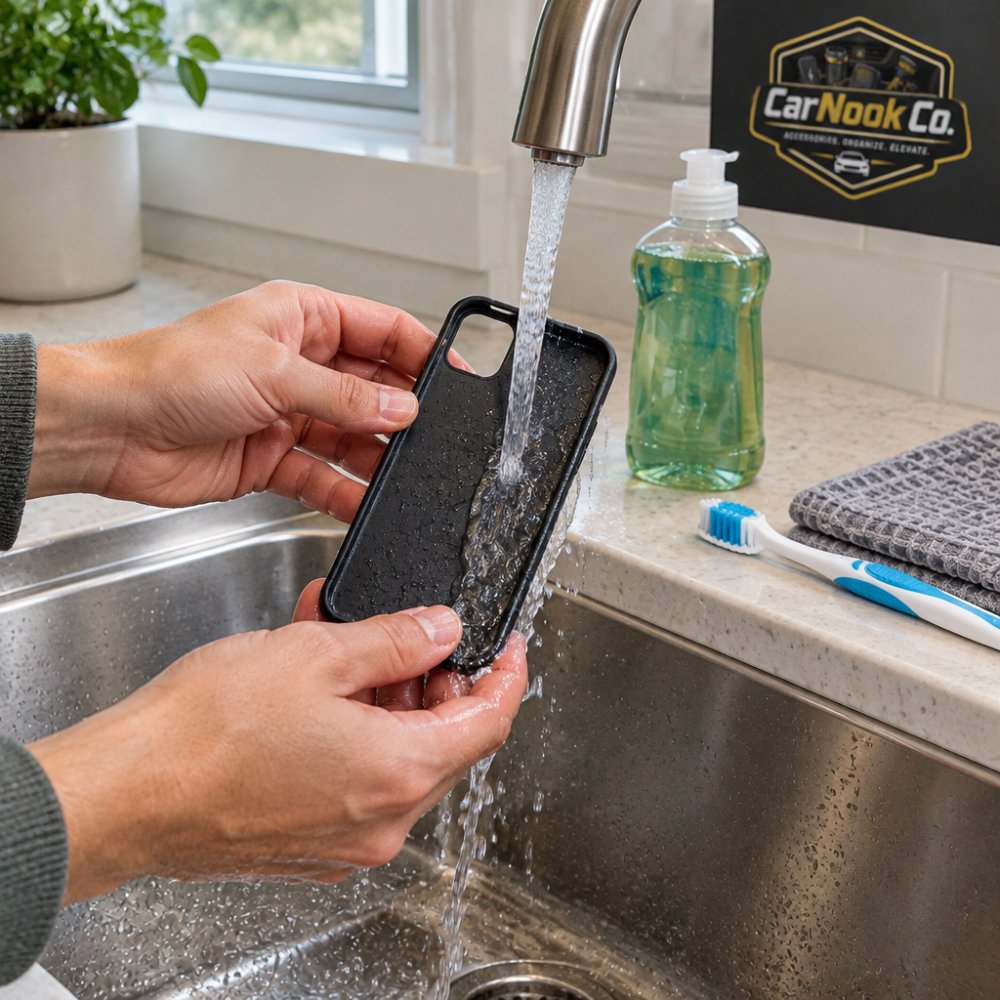
Here is the routine most cases respond well to. It takes a few minutes and uses supplies you likely already have.
Skip the dishwasher and the washing machine. Heat and tumbling can warp a thin shell.
Each material has its own quirks, and treating them the same can shorten a case's life.
TPU and silicone are flexible and grippy, which also means they hold oil and lint. Wash them with mild soap and lukewarm water, then dry fully. Silicone can attract dust right after cleaning, so a quick wipe with a dry microfiber cloth helps. If you like a soft, flexible feel, the CarNook™ SpotFlex Silicone Phone Case is built from flexible TPU with a comfortable grip.

Polycarbonate is the hard, clear plastic common in slim cases. It resists staining better than soft plastic but can scratch, so avoid abrasive sponges. Wipe it with soapy water and a microfiber cloth, and never scrub a clear back with a rough pad.
Leather-style and imitation leather finishes need the least water. Wipe with a barely damp cloth and dry right away. The CarNook™ RidgeMag Premium Leather Magnetic Phone Cover uses a textured leather-style finish that suits a light-touch routine.

To disinfect a phone case safely, wipe it with a 70% isopropyl alcohol wipe, then let it air dry. Keep alcohol for occasional sanitizing, not daily washing. Frequent alcohol use can dry out soft plastics and dull some finishes over time.
Here is the key distinction most guides skip: cleaning and sanitizing are different jobs. Cleaning removes visible grime, oil, and lint. Sanitizing reduces germs. Your case needs both, but not at the same frequency.
For sanitizing:
Do not soak a case in alcohol or pour it into the port cutouts. A wipe is enough.
For a routine that protects both the case and your phone, sanitize once a week or when the case has been somewhere crowded, and clean with soap and water more often.
Yellowing in clear cases usually comes from oxidation and UV exposure, not dirt. That means some discoloration is a material change, not a cleaning problem. Consumer Reports' phone case guidance points out that a case's fit matters for protection, and a clean case keeps that snug fit working.
It helps to separate two jobs that get blurred together. Aesthetic cleaning removes visible grime, oil, fingerprints, and surface stains. Sanitizing reduces germs your hand picks up from counters, gym equipment, and shared surfaces. A case can look spotless and still carry a film of bacteria, and a case can be sanitized while still showing a yellow tint. Treat them as separate tasks on separate schedules.
Clear polycarbonate and clear TPU generally need a gentler touch than colored plastic, since scratches and clouded patches are easier to see. A workable routine:
CarNook™ FlexShield Shock-Absorbing Protective Phone Cover →
Watch out: scrubbing a clear back with a rough pad or a melamine-style eraser can leave fine scratches that scatter light and make the case look permanently hazy, even when it is clean.
Clear cases typically yellow through a combination of UV exposure and oxidation of the plastic itself, and the process can be accelerated by heat. A phone left on a dashboard or in a hot car repeatedly can discolor faster than one kept in a pocket or bag. Oils from your hands and sunscreen residue can add a surface tint on top of that, which is why a case sometimes looks better after a wash even when the underlying plastic has already changed.
That distinction matters for expectations. Surface film responds to cleaning. Plastic that has turned amber through oxidation generally will not return to clear no matter how hard you scrub, and aggressive cleaners can make it worse by dulling the finish.
For stains that are surface-level, try these in order:
Use a soft cloth or toothbrush to work the paste into stained areas, then rinse well. Test any paste on a hidden spot first, and keep vinegar contact short rather than leaving the case to soak.
What about deep yellowing? If the plastic itself has turned, cleaning will not reverse it. A case that has yellowed through oxidation is showing its age, not its dirt. That is a good moment to think about a fresh case rather than scrubbing harder.
Prevention beats scrubbing. A few habits can slow discoloration:
Smartish's 2026 clear case guide recommends a weekly clean with a diluted soap mix to help prevent yellowing and buildup. A steady routine does more than any single deep clean.
If you want a clear-style case you can keep clean without fighting a textured surface, the CarNook™ DotWave Magnetic MagSafe-Compatible Phone Cover pairs a slim profile with a built-in magnetic ring, and a smooth back panel wipes down in one pass.
Most cleaning guides give one set of instructions for every case. That is where damage happens. A cleaner that is fine on hard polycarbonate can soften a soft-touch coating, strip the finish off a leather-style cover, or cloud a clear back. The table below is the part most guides skip: what each material actually reacts badly to, and why.
| Material | Avoid | Why it matters |
|---|---|---|
| TPU and silicone | Bleach, acetone, harsh solvents, long alcohol soaks | These can break down the flexible material, leaving it sticky, cracked, or stretched |
| Polycarbonate (clear or colored) | Abrasive scrubbers, scouring pads, melamine erasers | Fine scratches cloud a clear back and trap dirt in the grooves |
| Soft-touch coatings | Alcohol-heavy cleaners, repeated scrubbing | The matte coating can wear thin or turn tacky where it is rubbed most |
| Leather-style and imitation leather | Soaking, alcohol-heavy cleaners, prolonged dampness | Water and solvents can dry, discolor, or stiffen the surface |
| Any case with a magnetic ring | Strong cleaners around the ring, soaking the ring area | Residue and moisture can collect around the ring; dry it fully before use |
| Wood or natural-material cases | Soaking, dishwashers, harsh detergents | Natural materials can swell, warp, or lose their finish with excess water |
A few rules apply across the board:
Watch out: soft-touch and matte finishes are the easiest to ruin by over-cleaning. If the surface starts to feel tacky or looks patchy, back off to plain mild soap and a microfiber cloth, and follow the case manufacturer's care instructions where they are provided.
If you prefer a finish that tolerates a light-touch routine, the CarNook™ RidgeMag Premium Leather Magnetic Phone Cover uses a textured leather-style finish that suits a barely damp cloth rather than a soak. For flexible everyday cleaning, the CarNook™ SpotFlex Silicone Phone Case is built from flexible TPU with a comfortable grip, and it responds well to mild soap and lukewarm water.
Aim to clean a slim case weekly with mild soap and water, and sanitize it about once a week or after crowded outings. Deep clean with baking soda or vinegar only when you spot a stain. Daily wiping with a dry microfiber cloth keeps oil and fingerprints in check between washes.
Drying matters as much as washing. Follow these steps:
Never dry a case with a hair dryer or on a radiator. Heat can warp thin plastic. Trapped moisture under a case can also fog your phone's surface, so wait until the case is completely dry.
Cleaning related accessories? A phone lanyard picks up the same oils and grime. How to clean a phone lanyard without damaging clips walks through that routine so your whole setup stays fresh.
The easiest slim case to clean is one with smooth surfaces, tight seams, and a finish that resists oil. Fewer grooves mean less trapped grit. A snug fit also keeps debris from working its way under the shell.
When shopping, check these points:
If you want to compare slim, MagSafe-compatible options with real protection, buy a minimalist phone case for iPhone with a design that is easy to maintain. For a case that pairs a slim profile with a built-in magnetic ring, the CarNook™ DotWave Magnetic MagSafe-Compatible Phone Cover is designed for select iPhone models and compatible magnetic accessories.
A clean case also protects your gear. Grit trapped in a loose or dirty case can rub against your phone, and a snug, clean fit helps it do its job.
Mix a small amount of mild dish soap with lukewarm water, remove the case from your phone, and wipe it down with a microfiber cloth or soft-bristle toothbrush. Pay attention to grooves and seams where oil buildup collects. Rinse, then air dry completely before putting it back on. Avoid abrasive scrubbing, which can damage the synthetic material and leave the surface looking worn.
Isopropyl alcohol can help with sanitization and fingerprint removal, but it is not ideal for every material. It may dull or dry out some finishes on TPU and polycarbonate cases over time, so check the case manufacturer's guidance first. For routine surface grime, mild dish soap and lukewarm water are gentler. Save alcohol wipes for occasional disinfecting rather than daily cleaning.
Yellowing in clear cases often comes from oxidation and UV exposure rather than dirt, so cleaning alone may not reverse it. A gentle paste of baking soda and water can lift surface stains and residue. For deeper discoloration, white vinegar diluted with water may help slightly. If the plastic itself has oxidized, the change can be permanent, which is why prevention matters more than restoration.
A weekly maintenance routine with a 1:10 soap-to-water mixture and a microfiber cloth is a reasonable baseline, especially for clear and slim cases that show grime quickly. Wipe the case more often if you use it in the car, at the gym, or while eating. Regular cleaning also keeps debris out of the seams so the case maintains a snug fit on your phone.
Keeping a slim case clean is a small habit with a real payoff: it looks better, grips better, and lasts longer. CarNook Co. builds phone cases and accessories for everyday use, including slim MagSafe-compatible covers, flexible TPU cases, and protective designs with raised edges. Explore the CarNook Co. phone case collection and find a slim case that fits your routine and stays easy to care for.


