


⚡ Free Express Shipping in USA✦
🔥 Newest Arrival Collection Live Now✦
✨ SUBSCRIBE TO GET YOUR 10% Off✦

Last Updated: August 29, 2026
Pickpockets, crowded terminals, and the constant juggle of boarding passes, IDs, and a smartphone create a perfect storm for losing or damaging your phone. Secure crossbody phone cases for travelers have become one of the most practical solutions for keeping devices protected and accessible without anxiety at every checkpoint. This guide from CarNook breaks down exactly what to look for, which features actually matter, and which crossbody phone cases are worth carrying on your next trip.
Quick Picks:
Choosing the right crossbody phone case comes down to three things: how well it protects your phone, how easy it is to access in motion, and how long it holds up over weeks of real travel.

Anti-theft design refers to the combination of closures, tethering mechanisms, and structural choices that make it difficult for someone to grab your phone without your knowledge.
The most effective anti-theft features include:
According to the U.S. Department of State travel safety guidance, pickpocketing is among the most common crimes affecting tourists abroad, and keeping valuables in front-facing, secured pouches is a consistently recommended countermeasure.
A crossbody phone case that falls apart after two trips is a liability. PU (polyurethane) leather is the most common material for crossbody phone cases, offering a balance of lightweight flexibility and surface durability while resisting minor scuffs and wiping clean easily.
Strap hardware is where many cases cut corners. Metal hardware, particularly at the clasp and strap anchor points, outlasts plastic equivalents significantly. Adjustable straps with stitched reinforcement at stress points hold up far better than those with simple folded hems.
Weather-resistant construction matters more than most buyers realize. A light rain shower or unexpected splash can damage a phone if the case offers no moisture barrier. Cases with sealed zippers or treated exterior surfaces provide meaningful protection in real-world conditions.
The CarNook™ CarryCard Crossbody Phone Case is the strongest all-around pick for travelers who want their phone, cards, and essentials in one secure, hands-free unit. It combines everyday smartphone protection with a wallet-style layout that eliminates the need to carry a separate card holder or small purse.

The built-in zipper storage compartment holds cards and small essentials securely, a meaningful upgrade over open-slot designs that allow cards to slip out during movement. The adjustable crossbody strap keeps the case positioned across the body rather than dangling at the side, which improves both comfort during long walks through terminals and security in crowded areas.
Pros:
Cons:
The CarNook™ ZipCarry Crossbody Phone Case is built specifically for Samsung users, covering many Samsung models including the S21 series, S22 series, Note 9 through Note 20 Ultra, and S10 lineup. The back-cover style construction in PU material keeps the profile slim while providing surface protection against everyday scuffs and minor impacts.
Five color options, black, purple, green, rose gold, and red, give travelers a choice between low-profile and expressive carries. What separates the ZipCarry from basic phone pouches is the crossbody configuration, which keeps the phone tethered to the body with an adjustable strap, removing the risk of setting the phone down and forgetting it.
Pros:
Cons:
The CarNook™ FlexCord Phone Lanyard takes a different approach to device security. Rather than a full pouch or wallet case, it functions as a wearable tether, a back-cover style case with a fabric lanyard that keeps the phone attached to the body at all times.

The silicone construction provides anti-drop and anti-fingerprint properties, which matters for travelers who handle their phones constantly throughout the day. The woven fabric lanyard element gives it a crossbody bag feel without the bulk of a full pouch case. Color options include woven pink, woven purple, woven antique white, and woven transparent, alongside standard white, green, black, and orange.
The FlexCord is designed for iPhone models only. For travelers using Android devices, the CarryCard or ZipCarry are better options. The minimalist carry philosophy makes it ideal for day trips, outdoor markets, and situations where quick access matters more than storage capacity.
Pros:
Cons:
Keeping a phone safe while traveling is about layering habits on top of the right gear. The case handles passive protection; the habits handle the gaps.
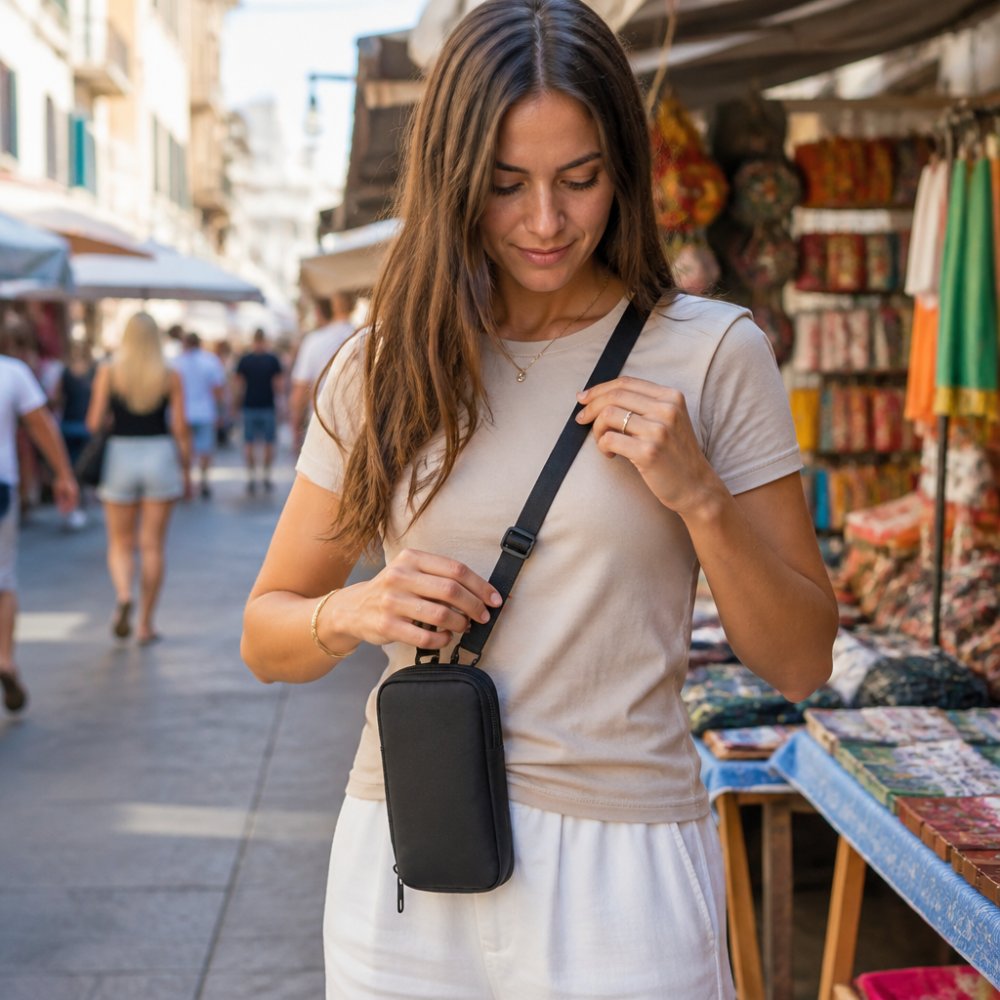
The most common mistake travelers make is treating phone security as an afterthought, choosing a case based on looks and then relying on luck in crowded spaces. A crossbody phone case with a secure closure and adjustable strap removes most passive risk. According to travel safety resources from the FBI's crime prevention guidance, situational awareness and keeping valuables secured to the body are among the most effective theft deterrents in high-traffic public environments.
Practical habits that complement a secure crossbody phone case:
Airport security creates a specific challenge: the phone needs to be accessible for boarding pass display, but the case should stay secure through the entire process. The best approach is to have the boarding pass pulled up before reaching the checkpoint and to keep the case zipped until the phone is actually needed. Cases with quick-access card slots, like the CarryCard, allow ID and boarding pass retrieval without opening the main compartment.
For TSA checkpoints, crossbody phone cases generally do not need to be removed from the body unless they contain significant metal hardware that triggers the scanner. Lightweight PU cases with fabric straps typically pass without issue. Checking TSA screening guidelines for personal items before departure removes any guesswork about what needs to be removed at security.
Most crossbody phone cases show wear in predictable places. The strap attachment point, where the lanyard or adjustable strap connects to the case body, experiences the most stress. Check this connection point every few weeks during regular use. Fraying fabric, loosening stitching, or a clasp that no longer clicks firmly shut are early warning signs that the strap is approaching failure.
The zipper pull is the second high-wear component. Zipper teeth that catch or skip during opening indicate the zipper track is wearing unevenly. Running a small amount of zipper lubricant along the track extends the life of the closure considerably.
The difference between a crossbody phone case and a traditional phone wallet comes down to how the case is carried and how much it stores.
A traditional phone wallet is a case that integrates card slots or a cash pocket into the phone's back cover. It sits in a pocket or bag like a standard phone case. The phone is accessible but not tethered to the body.
A crossbody phone case adds a strap, either a full adjustable crossbody strap or a shorter lanyard, that keeps the phone attached to the body. The phone becomes wearable tech rather than a loose item in a pocket.
Feature |
Crossbody Phone Case |
Traditional Phone Wallet |
|---|---|---|
Hands-free carry |
Yes, via strap or lanyard |
No |
Pickpocket prevention |
High, tethered to body |
Lower, pocket-based |
Card and ID storage |
Varies by model |
Usually included |
Bulk added |
Moderate |
Minimal |
Airport accessibility |
Quick with front-facing carry |
Requires reaching into pocket |
Best for |
Active travel, crowded areas |
Everyday commuting |
For travelers specifically, the crossbody configuration wins on security and convenience. The hands-free carry reduces fatigue during long walks through terminals and markets. The tethering prevents the phone from being left behind on surfaces. And the front-facing position keeps the device visible and accessible without creating a theft opportunity.
The right choice depends on device type, storage needs, and how much bulk is acceptable.
Choose the CarNook™ CarryCard Crossbody Phone Case if the priority is consolidating phone, cards, and essentials into one secure unit. The zipper storage and wallet-style layout make it the most travel-complete option.
Choose the CarNook™ ZipCarry Crossbody Phone Case if the device is a Samsung and the preference is a slim back-cover style with crossbody security. It offers precise model compatibility across the S and Note series with a lightweight PU build.
Choose the CarNook™ FlexCord Phone Lanyard if the device is an iPhone and the goal is a lightweight, minimalist tether rather than a full pouch. It's the most affordable path to hands-free, anti-drop carry without added bulk.
All three address the core problem that secure crossbody phone cases for travelers are designed to solve: keeping the phone on the body, accessible, and protected through the unpredictable conditions of real travel.
Traveling with an unsecured phone is a risk that's easy to eliminate. The right crossbody phone case keeps the device tethered, accessible, and protected without adding significant weight or complexity to the carry. CarNook's lineup of crossbody phone cases and the FlexCord lanyard covers the most common device types and travel styles, with options ranging from full wallet-style storage to minimalist anti-drop lanyards. Explore CarNook's travel accessories collection to find the right fit for your next trip.
A: Crossbody phone cases significantly reduce theft risk compared to keeping your phone in a pocket or open bag. Worn across the body and kept in front, they make it much harder for pickpockets to access your device undetected. Models with zipper closures and secure hardware add another layer of protection. For maximum device security, pair a crossbody case with an anti-theft phone lanyard so your phone stays tethered even if the case is jostled or opened.
A: Prioritize these features: a secure zipper or clasp closure to prevent quick grabs, an adjustable crossbody strap with durable hardware, built-in card storage for boarding passes and IDs, and a protective case design that guards against drops. Weather-resistant or PU materials add durability. For hands-free convenience, confirm the strap length suits your body and travel style. Compatibility with your specific phone model matters too — always verify fit before purchasing.
A: A good anti-theft phone lanyard keeps your device tethered to your body so it cannot be snatched or dropped. Look for silicone or woven fabric construction for durability, a secure attachment point that fits your phone case, and an adjustable cord length. The CarNook™ FlexCord Phone Lanyard is designed for iPhone models and offers anti-drop function in multiple colors, making it a practical, lightweight option for travelers who want quick access without sacrificing device security.
A: Compatibility with wireless charging depends on the specific case design and material. Most PU crossbody phone cases may require you to remove the phone from the case to charge wirelessly, as the wallet-style construction and added card storage layers can sometimes interfere with the charging signal. If wireless charging is a priority, check the product description carefully. For everyday travel use, the minor inconvenience of removing the phone to charge can be a reasonable trade-off for the security and storage benefits these cases provide.
A: The right lanyard length depends on how you plan to carry your phone. A shorter cord keeps the phone close to your chest for quick access and better pickpocket prevention. A longer adjustable strap lets you wear the phone at hip level, which works well for sightseeing or hands-free movement. Most travelers prefer an adjustable option so they can switch between positions throughout the day. Always check the maximum and minimum strap lengths listed in the product specifications before buying.
This article was written using GrandRanker

