


⚡ Free Express Shipping in USA✦
🔥 Newest Arrival Collection Live Now✦
✨ SUBSCRIBE TO GET YOUR 10% Off✦

Last Updated: October 15, 2026
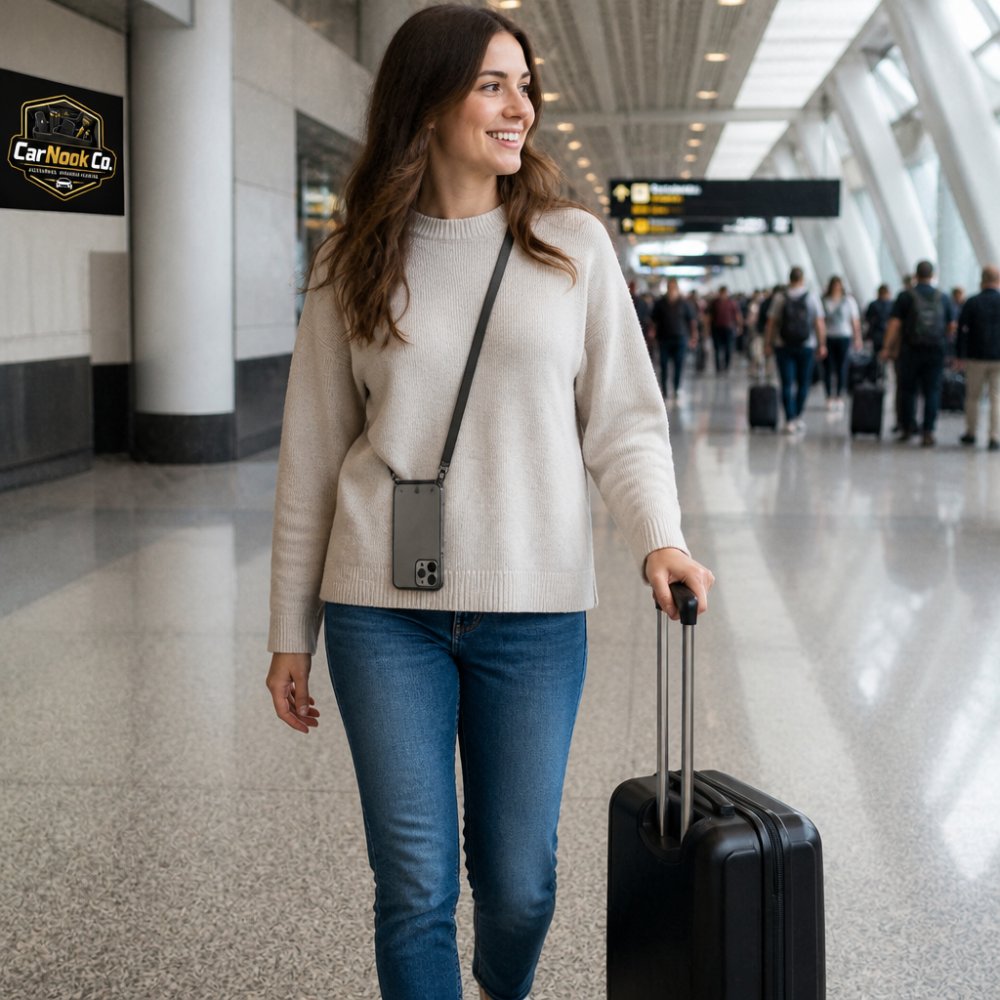
When choosing the best crossbody phone cases for travel, you'll find they transform how you carry your device by keeping it secure and accessible around your body. Instead of fumbling through a backpack or risking a dropped phone while juggling luggage, your phone stays secure and accessible around your body. This setup keeps both hands free, essential when navigating crowded airports, managing luggage, or exploring unfamiliar areas on foot.
The best crossbody phone cases for travel combine phone protection with practical storage. Most include built-in pockets for cards, IDs, or small essentials, eliminating the need for a separate wallet. The adjustable strap design means the case sits comfortably whether you're walking, sightseeing, or sitting at a café. For frequent travelers, this hands-free approach reduces stress and keeps your most important device within immediate reach.
Travel often means unpredictable situations, crowded markets, rushing between transportation, or exploring on foot. A crossbody phone case addresses these scenarios by keeping your phone secure against your body rather than in a bag where it's harder to access quickly. The strap design also provides a psychological comfort: you know exactly where your phone is at all times.
| Product | Price | Best For | Key Feature |
|---|---|---|---|
| CarNook ZipCarry | $34.99 | Samsung Galaxy users | Built-in zipper pocket for essentials |
| CarNook CarryCard | $34.99 | Multi-phone compatibility | Adjustable strap for custom fit |
| CarNook ColorLoop Wristband | $24.99 | iPhone users | Lightweight with bold design |
| CarNook FlexCord Lanyard | $19.99 | Minimal carrying | Hands-free with woven cord |
Each option serves different travel styles and phone models. The choice depends on how much storage you need, which phone you carry, and whether you prefer a full case or a minimal lanyard setup.

The CarNook ZipCarry Crossbody Phone Case stands out for travelers who want everything in one place. This crossbody phone case combines phone protection with practical storage, a built-in zipper pocket holds cards, IDs, and cash without requiring a separate wallet.

The case uses PU material for durability while staying lightweight for travel. The crossbody strap enables hands-free carrying, which matters when you're managing luggage or navigating crowded spaces. Available in multiple colors (Black, Purple, Green, Rose Gold, Red), it works with select Samsung Galaxy models, making it ideal for Galaxy users who want integrated storage.
What makes this option practical: you can access your phone and essentials without digging through a backpack. The wallet-style storage eliminates the need to carry multiple items. For travelers who prefer consolidated carrying, this design reduces friction during daily activities.
The CarNook CarryCard Crossbody Phone Case prioritizes comfort through its adjustable crossbody strap, a feature that changes how a case feels during travel. When you're wearing the case all day while sightseeing or moving between locations, strap length matters. An adjustable strap means the case sits at the right height whether you're wearing light layers or heavier outerwear.

This crossbody phone case includes built-in zipper storage for cards and small items, matching the practical approach of integrated wallet functionality. The design works with select phone models. Available in multiple colors, it balances style with function.
The adjustable strap is the real differentiator here. Travel involves different clothing and movement patterns throughout the day. A strap that adapts to your needs reduces the need for readjustment and keeps the case positioned correctly for both security and comfort.
For travelers who move between different carrying situations, sometimes with a jacket, sometimes without, the adjustable strap prevents the constant repositioning that comes with fixed-length designs.
The CarNook FlexCord Phone Lanyard takes a minimalist approach to crossbody phone carrying. This lightweight lanyard uses a woven cord design and attaches to compatible iPhone models and supported cases, offering hands-free carrying without a full case.
The appeal is simplicity. If you already have a phone case you like, the lanyard adds hands-free functionality without replacing your existing protection. The woven cord design is comfortable, and the lightweight design means you barely notice it's there during travel.
This crossbody option works well for travelers who want to avoid carrying a bag but still need hands-free access to their phone. The lanyard keeps your device secure and accessible, important in crowded areas or when your hands are occupied with luggage.
The trade-off: minimal storage. Unlike full crossbody cases, the lanyard doesn't include pockets for cards or essentials. You'll need another way to carry IDs, cards, or cash. For travelers who use a small backpack or keep essentials in their pockets, this works fine. For those who want everything consolidated, a full crossbody case is better.
The CarNook ColorLoop Wristband Phone Case offers a different approach, a protective case with a built-in wrist strap rather than a full crossbody design. This option works for iPhone users and provides secure carrying without a shoulder strap.
The wrist strap reduces accidental drops and provides security in crowded areas. The case uses TPU and PC materials for protection, and the colorful design options (Blue, Yellow, Dark Green) add visual appeal. The built-in wrist strap means your phone stays tethered to your hand, which matters in busy tourist areas or crowded transportation.
This isn't a traditional crossbody case, but it serves travelers who want secure, hands-free carrying without a full shoulder strap setup. The wrist strap keeps your phone from being lost or dropped, and precise access to buttons and ports means you can use your phone without removing the case.
The wrist strap approach works well for shorter travel days or situations where you're mostly on foot. For longer trips where you're carrying multiple items, a full crossbody case might be more comfortable.
Choosing the right crossbody phone case for travel comes down to a handful of decisions that are easy to get wrong from a product photo alone. Here is what actually matters, in the order most travelers should think about it.
A case that does not fit your phone is a non-starter. Before anything else, confirm three things:
CarNook™ ZipCarry Crossbody Phone Case →
If you rely on wireless charging, look for a case described as wireless-charging compatible, and treat "MagSafe-compatible" as different from "MagSafe certified." A case can be compatible with magnetic accessories without carrying official certification. Thick wallet pockets, metal plates, and card slots can interfere with wireless charging, so if charging through the case matters to you, verify it before buying rather than assuming.
This is where travel cases differ most, and where product photos tell you the least.
Storage is a trade-off between convenience and bulk.
Travel exposes a case to rain, heat, dust, and frequent handling. Materials commonly used in crossbody cases include PU (polyurethane), TPU, and PC (polycarbonate). If you expect rain, look for water-resistant materials and sealed or covered closures, and consider a separate waterproof pouch for heavy weather.
A crossbody case is worn, not just carried, so comfort over a full day matters. Consider:
There is no single best configuration, only the one that fits how you move. A traveler who wants phone, cards, and ID in one place will value built-in storage. A traveler who already carries a small bag may prefer a minimal lanyard that adds hands-free carrying without duplicating what they already have. Decide what you want the case to replace, then choose the design that does that job well.
For related carrying and charging setups, see our crossbody phone cases and MagSafe-compatible accessories.
Most roundups compare carrying methods on storage and convenience. For travel, the more useful comparison is security and access in crowded places, because that is where the trade-offs actually show up.
If theft prevention is a priority, look past the strap and at these specifics:
A few habits pair well with any crossbody setup:
Crossbody cases are not the right answer for every trip. If you are carrying a laptop, camera, and multiple layers, a backpack plus a slim crossbody case for your phone can be a better combination than trying to fit everything into one case. If you are mostly stationary at a hotel or office, a standard pocket case may be all you need. The crossbody format earns its place when you are moving through unfamiliar, crowded, or hands-busy environments and want your phone both secure and immediately reachable.
For travelers building a complete setup, pairing a crossbody case with a car phone mount for rental cars and rideshares keeps the same hands-free approach working on the road.
The best crossbody phone case for travel matches how you actually move and what you actually carry. A Samsung Galaxy user who wants integrated wallet storage has different needs than an iPhone user who prefers minimal setup.
CarNook Co. offers options across different phone models and carrying styles, from the CarNook ZipCarry with built-in wallet storage to the CarNook FlexCord for minimalist travelers. Each is designed to help keep your phone secure, your essentials accessible, and your hands free.
Start by identifying what matters most for your trips. Then match that priority to the option that delivers it. A crossbody phone case becomes genuinely useful when it fits your actual travel routine, not what you think you should carry, but what you actually do.
Look for secure phone protection, built-in card or cash storage, and an adjustable or detachable strap. The case should be compact and lightweight so it doesn't add bulk to your luggage. Ensure it's compatible with your phone model and offers easy access to your device without removing it from the case. A water-resistant material helps protect against unexpected weather.
Yes. Crossbody cases with built-in wallet features include zipper pockets or card slots designed to hold ID, credit cards, and small cash amounts. This keeps your essentials together in one compact case, eliminating the need for a separate wallet during travel. Check the storage capacity before purchasing to ensure it fits your typical daily carry needs.
A crossbody phone strap offers more storage and protection since it's integrated into a case, making it better for longer trips. A phone lanyard is lighter and more minimal, ideal for short outings or when you want to reduce bulk. Both provide hands-free carrying. Choose based on whether you need wallet storage and how much phone protection you want.
Compatibility varies by product. Most crossbody cases are designed for specific phone models, such as select iPhone or Samsung Galaxy devices. Check the product listing to confirm your phone model is supported before purchasing. Some cases work with protective cases you already own, while others are designed as standalone protection.
Travel is easier when your phone is secure and accessible. Explore CarNook's crossbody phone cases and lanyards to find the option that matches your travel style and phone model. From integrated wallet storage to lightweight hands-free designs, the right accessory makes every trip simpler.

