



Table of Contents
- Why Your Car Phone Mount Keeps Falling Off
- Best Place to Mount Phone in Car for Maximum Stability
- Prepare Your Dashboard Surface for Permanent Adhesion
- Dashboard Phone Mount Adhesive Tips That Actually Work
- How to Clean Suction Cup Phone Mount for Better Grip
- Temperature and Environmental Factors Affecting Mount Security
- Troubleshooting Common Mount Failures and Quick Fixes
- Frequently Asked Questions
Last Updated: September 2, 2026
Why Your Car Phone Mount Keeps Falling Off
A phone mount that slips during a turn or vibrates loose on the highway defeats its purpose. The problem usually isn't bad luck, it's one of three things: the mounting surface wasn't properly prepared, the adhesive or suction mechanism has degraded, or the mount was placed somewhere that experiences constant movement and vibration. Each issue has a fix that takes minutes to implement.
Temperature fluctuations, dust accumulation, improper surface preparation, and mounting location all play roles in whether your phone stays put or becomes a distraction. The good news is that keeping a car phone mount secure is entirely within your control once you know what to address.
Best Place to Mount Phone in Car for Maximum Stability
Location determines half the battle when it comes to keeping your car phone mount secure. The best mounting spots combine three factors: minimal vibration, clear line of sight, and stable surface contact.
The dashboard near the windshield ranks as the most popular choice. It keeps your phone at eye level for GPS navigation, minimizes vibration compared to other locations, and provides a large, flat surface for mounting hardware. Position it slightly off-center to avoid obstructing your view while keeping the device within easy reach.
The air vent is another strong option, particularly for vehicles with horizontal vents. Vent clips apply pressure through friction and tension rather than adhesive, which means they work on virtually any interior material without residue concerns. Check the mount weekly to prevent gradual slippage from vibration.
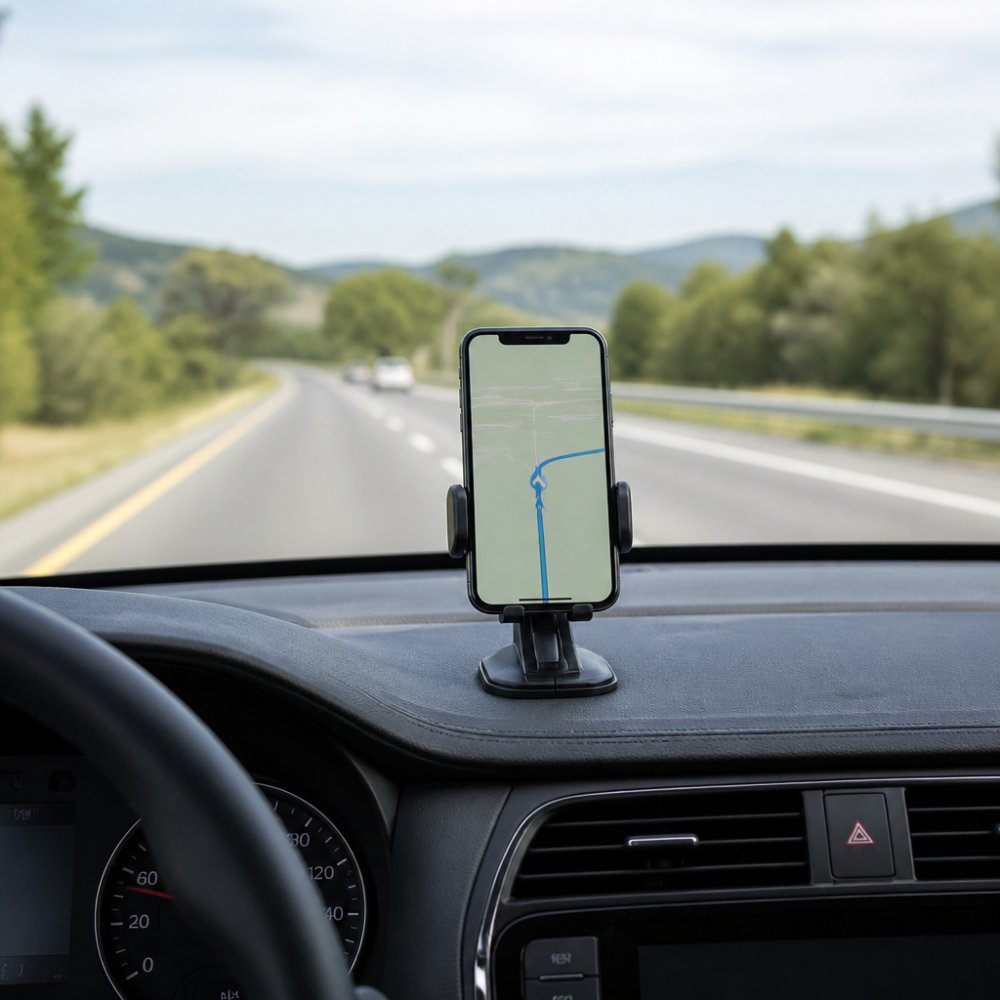
The seat rail offers a highly effective mounting location. Rail-mounted systems use mechanical clamps that grip with a locking mechanism, creating a secure attachment point that experiences far less vibration than the dashboard. This works especially well for road trips where your phone needs to stay stable for extended periods.
Cup holders and door panels should generally be avoided. Cup holders flex during acceleration and braking, and door-mounted phones vibrate with every window adjustment or door slam. Both locations make keeping your car phone mount secure significantly harder.
The windshield suction cup mount is viable if dashboard space is limited, but it requires more maintenance. Suction cups lose grip as the rubber deteriorates and dust accumulates, making this option best suited for temporary installations rather than permanent daily use.
Prepare Your Dashboard Surface for Permanent Adhesion
Surface preparation is where most people fail at keeping their car phone mount secure. A clean surface is the foundation of everything that comes after.
Start by removing any existing residue from old mounts using isopropyl alcohol on a microfiber cloth. This step is critical because old adhesive acts as a barrier between your new mount and the actual dashboard surface.
Next, clean the entire mounting area with a microfiber cloth and isopropyl alcohol to remove dust, skin oils, and contaminants that reduce adhesive contact. Allow the surface to dry fully before applying any mount, at least 30 seconds of air-drying time, longer in humid environments.
Check your dashboard texture. Heavily textured surfaces create air pockets that prevent full adhesive contact. If your dashboard is textured, a vent clip or magnetic mount becomes more reliable than adhesive-based solutions.
Temperature matters during installation. Adhesive pads bond more effectively when applied at room temperature or slightly warmer. Installing a mount in cold weather (below 50°F) can result in weak initial bonding that fails within days.
Dashboard Phone Mount Adhesive Tips That Actually Work
Adhesive-based mounts are popular because they're affordable, unobtrusive, and work on most dashboard materials. Adhesive quality and application technique determine whether your mount stays secure for months or fails within weeks.
Higher-quality mounting pads use stronger polymer formulations that maintain grip across temperature ranges and vibration cycles. When applying the adhesive pad, press firmly for a full 10 seconds. Inadequate pressure means the adhesive doesn't make full contact with the dashboard surface, creating weak spots that fail under vibration.

Leave the mount undisturbed for at least 24 hours after installation before using it. The adhesive needs time to cure and form a strong bond with the dashboard.
Thicker pads provide better vibration dampening than thin pads, which means your phone experiences less shock from road bumps and acceleration. This reduced vibration stress extends the lifespan of both the adhesive bond and your mounting hardware.
If your original adhesive pad has lost grip after months of use, replacement pads are inexpensive and easy to swap. For vehicles that spend time in hot climates, use an adhesive pad rated for higher temperatures to prevent softening and loss of grip.
How to Clean Suction Cup Phone Mount for Better Grip
Suction cup mounts rely on a rubber cup creating a seal against smooth glass or plastic surfaces. When that seal deteriorates, the mount fails. Regular cleaning extends the functional life of the cup by removing particles that interfere with the seal.
Start by removing the mount from your windshield or dashboard. Use warm soapy water and a soft cloth to gently clean the rubber cup. Avoid abrasive scrubbing, which can damage the rubber.
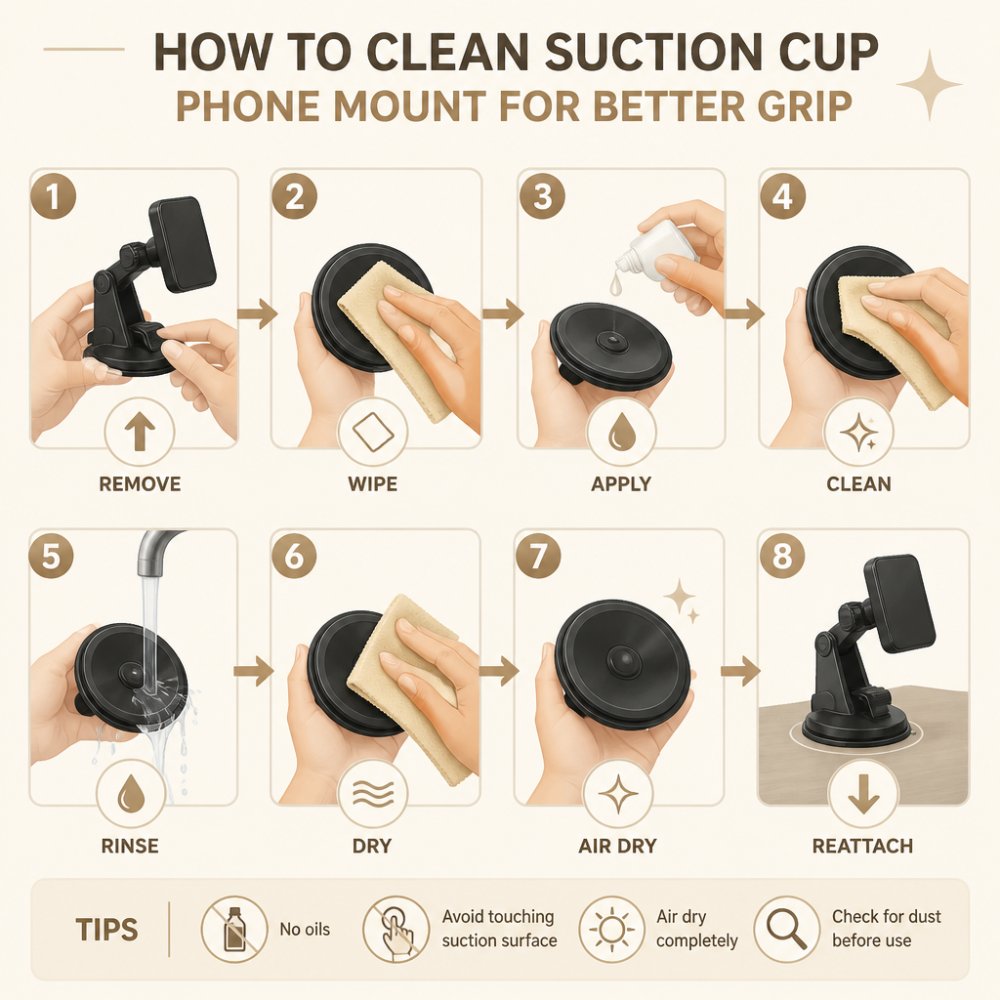
Dry the cup completely with a microfiber cloth. Water trapped between the cup and the mounting surface prevents a good seal. Check the mounting surface with the same attention, cleaning it with isopropyl alcohol and allowing it to dry fully.
When you reinstall the mount, apply steady, even pressure to the suction cup lever or button. The cup should make full contact with the glass or plastic surface. If your suction cup has lost grip despite cleaning, the rubber may have hardened from age and UV exposure. Replacement suction cup heads are available for most mounts.
Temperature and Environmental Factors Affecting Mount Security
Your car experiences dramatic temperature swings throughout the day and across seasons. These temperature changes affect both adhesive bonds and mechanical mounting hardware.
Adhesive pads lose grip in heat. As temperatures rise, the polymer in the adhesive softens slightly, reducing its holding power. This is why a mount that feels secure in the morning can start to slip by afternoon in hot weather. Repeated heat cycling gradually degrades the adhesive's long-term bonding strength.
Cold temperatures create a different problem. Adhesive becomes brittle in cold, which means the bond becomes less flexible. If your mount experiences sudden vibration or movement in cold weather, the brittle adhesive can crack rather than flex, causing failure.
Suction cups are especially vulnerable to temperature changes. Heat causes the rubber to soften and lose its seal. Cold causes it to contract and become less flexible. In climates with large temperature swings, suction cup mounts may need daily reinstallation to maintain security.
UV exposure degrades rubber and some plastics over time. Parking in shade or using a sunshade slows this degradation. Humidity affects adhesive performance, moisture can penetrate the adhesive bond over weeks, weakening it. This is why surface preparation with isopropyl alcohol is even more critical in humid climates.
The best defense against temperature-related failures is choosing a mounting method suited to your climate. In hot climates, magnetic mounts or vent clips often outperform adhesive. In cold climates, ensure your adhesive has time to cure fully before driving.
Troubleshooting Common Mount Failures and Quick Fixes
Even with proper installation, mounts can develop problems. Knowing what's causing the failure helps you fix it quickly.
Mount slips during acceleration or braking: This usually means the adhesive pad is losing grip due to heat, age, or improper initial installation. Try cleaning the mounting surface and the back of the mount with isopropyl alcohol. If cleaning doesn't help, replace the adhesive pad.
Phone tilts or rotates in the mount: The mounting hardware itself may be loose. Check all bolts, screws, or locking mechanisms and tighten them. For magnetic mounts, ensure the metal plate is fully attached to your phone case.
Suction cup won't stick: Clean both the cup and the mounting surface with isopropyl alcohol. If it still won't stick, the rubber cup has likely hardened and needs replacement.
Adhesive residue won't come off: Isopropyl alcohol removes most adhesive residue. For stubborn residue, apply alcohol and let it soak for 2-3 minutes before rubbing gently. A plastic scraper tool can help remove dried adhesive without scratching the surface.
Mount vibrates excessively: The mounting location may be experiencing too much vibration. Try moving the mount to a different location with less movement, or add vibration-dampening material between the mount and the dashboard.
Mount works fine in cold weather but fails in heat: Your adhesive pad is temperature-sensitive. Replace it with a pad rated for higher temperatures, or switch to a non-adhesive mounting method like a vent clip or magnetic mount.
Keeping your car phone mount secure comes down to three fundamentals: choosing the right location, preparing surfaces properly, and maintaining the mount over time. Temperature, humidity, and vibration will always test your setup, but these challenges are manageable with the right approach.
For drivers looking to upgrade their mounting solution, CarNook offers the CarNook™ DashGrip Phone Mount, which combines a reinforced adhesive pad with adjustable mounting hardware designed for stability across temperature ranges. The mount works with most phone cases.
If you prefer a magnetic solution, the CarNook™ MagClip Phone Holder eliminates adhesive concerns entirely. It uses a strong magnetic attachment that works across different phone cases and mounting locations, making it ideal for drivers who switch vehicles or like flexibility in placement.

Both options are designed with the everyday commuter in mind, secure enough for highway driving, simple enough to install in minutes, and reliable enough that you won't think about your mount again until you want to upgrade it.
Explore CarNook's collection of car phone mounts and mobile accessories to find the solution that fits your vehicle, your phone, and your driving habits.
Frequently Asked Questions
Why does my car phone mount keep falling off on bumpy roads?
Your car phone mount likely fails due to inadequate surface preparation, wrong mounting location, or adhesive breakdown from heat and vibration. Dashboard surfaces with texture, dust, or residue prevent secure attachment. Vent clips and suction cups lose grip when the mounting surface is dirty or the adhesive pad degrades. Proper surface cleaning with isopropyl alcohol and choosing a smooth, stable dashboard area dramatically improves security.
How do I clean a suction cup phone mount to make it stick better?
Remove the suction cup and wash it with warm soapy water, then dry completely with a microfiber cloth. Wipe the vehicle surface where you'll mount it with isopropyl alcohol on a clean cloth to remove dust, oils, and residue. Let both surfaces dry fully before reattaching. A clean suction cup creates better friction and seal against the glass or smooth dashboard surface, restoring grip that vibration and dirt have weakened.
What's the best place to mount a phone in a car for security and visibility?
Mount your phone on a smooth, flat dashboard area at eye level or slightly below, away from air vents and direct sunlight. The ideal spot provides a clear line of sight to the road without obstruction and minimizes vibration from engine and road movement. Avoid textured or curved dashboard sections, which reduce adhesive contact. Vent mounts work well if the vent has a firm, non-flexible frame that won't rattle during driving.
Does heat damage car phone mount adhesive?
Yes, sustained heat weakens adhesive pads over time. Dashboard temperatures can exceed 140°F in direct sunlight, causing the adhesive bond to fail gradually. Magnetic mounts and mechanical vent clips are less affected by temperature than adhesive pads. If you use an adhesive-based mount, park in shade when possible, and inspect the mount regularly in summer months.
This article was written using GrandRanker