



Table of Contents
- Why Phone Mounting Without Blocking Air Vents Matters
- Dashboard Phone Mount Installation for Stability
- Best Car Phone Mount for Road Trips: Seat Rail Solutions
- Magnetic Phone Mount Placement Without Airflow Obstruction
- Alternative Mounting Locations: Console and Cup Holder Adapters
- Hands-Free Driving Safety and Distracted Driving Prevention
- Common Mistakes to Avoid When Mounting Your Phone
- Conclusion
- Frequently Asked Questions
Last Updated: September 1, 2026
Why Phone Mounting Without Blocking Air Vents Matters
Mounting a phone securely in a car is essential for navigation, hands-free calling, and safety. The challenge is finding a solution that keeps the phone accessible without restricting airflow or damaging the vehicle's interior. Air vents serve a critical function in climate control, and blocking them reduces cooling or heating efficiency, especially on long drives or in extreme temperatures. A proper phone mount should deliver stability without compromise.
The best approach involves understanding the different mounting technologies available and matching them to your vehicle's layout. Dashboard mounts, seat rail solutions, and magnetic holders each offer distinct advantages depending on your priorities: stability, ease of installation, or interior protection.
Dashboard Phone Mount Installation for Stability
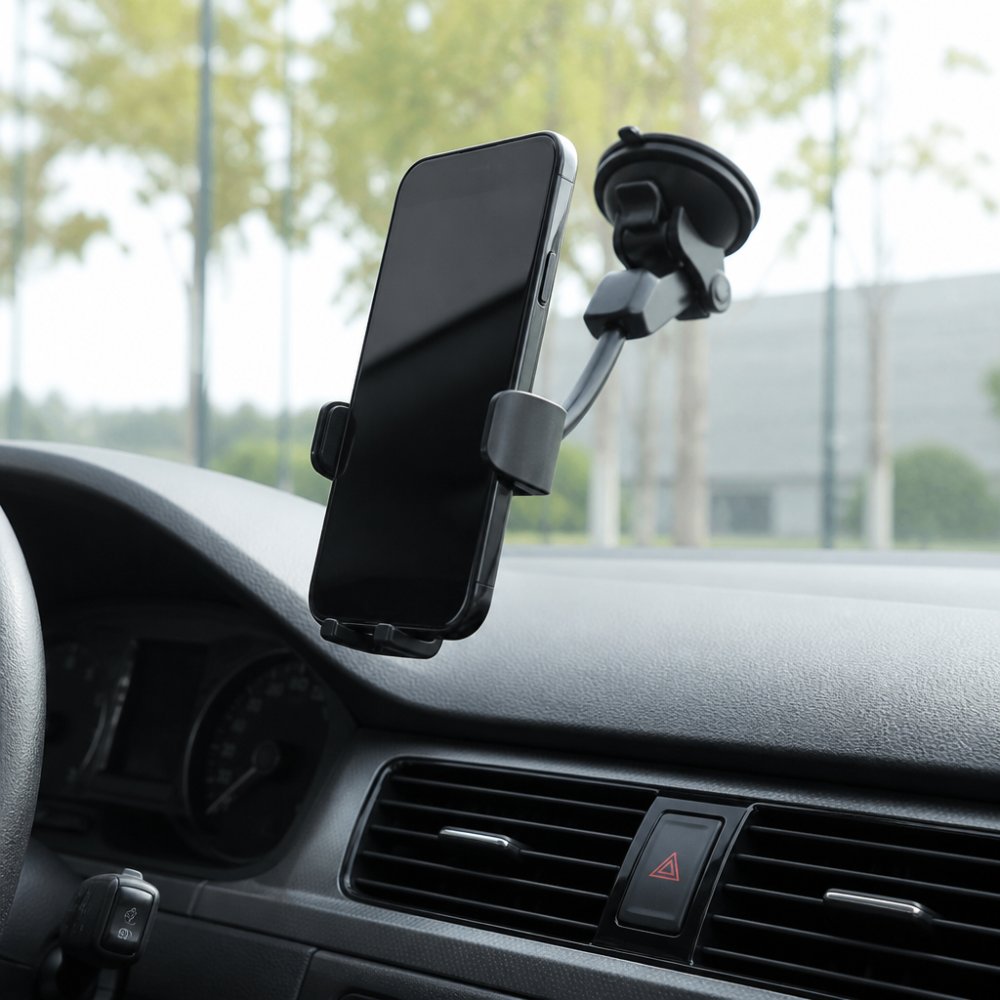
Dashboard mounting positions the phone at eye level for navigation without requiring vent modifications. A quality dashboard phone mount uses either adhesive backing or suction cup technology to stay fixed during acceleration, braking, and cornering.
Adhesive backing offers permanent placement and superior stability. The mount adheres directly to the dashboard using industrial-grade adhesive. Once installed, it doesn't shift during vibration or sudden maneuvers. The trade-off is that removal leaves residue requiring careful cleaning. Adhesive mounts work best if you plan to keep the same mounting location long-term.
Suction cup methods provide flexibility. You can reposition the mount or remove it entirely without damage. Suction cups rely on pressure against a smooth surface to create grip. During hot weather, suction cups can lose effectiveness as the adhesive weakens. On highway drives with constant vibration, some suction cup mounts drift or detach. Quality matters significantly; premium suction cup systems perform better than budget alternatives.
Adjusting Viewing Angles for Safe Navigation
The angle at which your phone sits affects both visibility and distraction. A mount positioned too low requires downward eye movement, increasing distraction time. The ideal angle positions the phone slightly below eye level and slightly to the right of center, matching how drivers naturally glance at instruments.
Many quality mounts feature ball joint rotation, allowing 360-degree adjustment. This flexibility lets you fine-tune the angle for your height, seating position, and preferred viewing distance. Test the viewing angle during a short drive before committing to permanent installation. What looks right in a parked car may feel awkward while driving.
Adhesive Backing vs. Suction Cup Methods
Adhesive backing provides the most stable long-term solution. Once cured, the mount won't shift during highway driving or rapid acceleration. Allow 24 hours for the adhesive to fully cure before using the mount. The downside is removal difficulty and potential dashboard damage if the adhesive tears the surface finish.
Suction cups offer temporary positioning with easy removal. They work best on smooth, clean surfaces like windshields or glass dashboard panels. On textured dashboards, suction cups may not seal properly. Temperature extremes reduce suction effectiveness. Many drivers find suction cups adequate for short commutes but unreliable for road trips.
Best Car Phone Mount for Road Trips: Seat Rail Solutions
Road trips demand a mounting solution that handles hours of continuous vibration without shifting. Seat rail mounts attach to the metal rails beneath the seat, distributing weight and vibration differently than dashboard or vent-mounted options. This mounting location keeps the phone visible but slightly lower than dashboard height, reducing glare and distraction.
Seat rail mounts typically use a clamp mechanism that tightens around the rail. Installation takes minutes and requires no adhesive or suction. The mount can be adjusted along the rail to find the optimal position for your seating arrangement. Most seat rail systems work with both front and rear seats.
The primary advantage is stability. The mount is anchored to the vehicle's structural frame rather than a surface panel. During long drives with road vibrations, seat rail mounts remain secure.
Installation Steps for Seat Rail Mounting
Installing a seat rail mount is straightforward and requires no tools beyond what comes in the package.
- Locate the metal rail beneath your seat. Push the seat forward to access the rail fully.
- Position the mount clamp around the rail at your preferred height, aligning the phone with your natural sightline when sitting upright.
- Tighten the clamp securely. The clamp should grip the rail firmly without rocking side to side.
- Attach your phone to the mount's cradle or holder. Ensure the phone sits level and doesn't tilt forward or backward.
- Adjust the viewing angle using the mount's rotation mechanism. Test the angle during a short drive to confirm visibility without distraction.
- For road trips, check the mounting security every few hours. Vibration can occasionally loosen clamps, especially on rough roads.
Vibration Dampening and Long-Term Durability
Vibration is the primary enemy of phone mounts. Engine vibration, road texture, and suspension movement create constant micro-movements that can loosen connections and cause mounts to fail. Quality mounts incorporate vibration dampening through rubber padding, flexible arms, or suspension-style mechanisms.
Rubber padding between the mount and the rail absorbs vibration energy, reducing the force transmitted to your phone. For long-term durability, check the mount's material quality. Plastic mounts may crack after months of vibration exposure. Metal mounts with rubber components typically last longer.
Magnetic Phone Mount Placement Without Airflow Obstruction
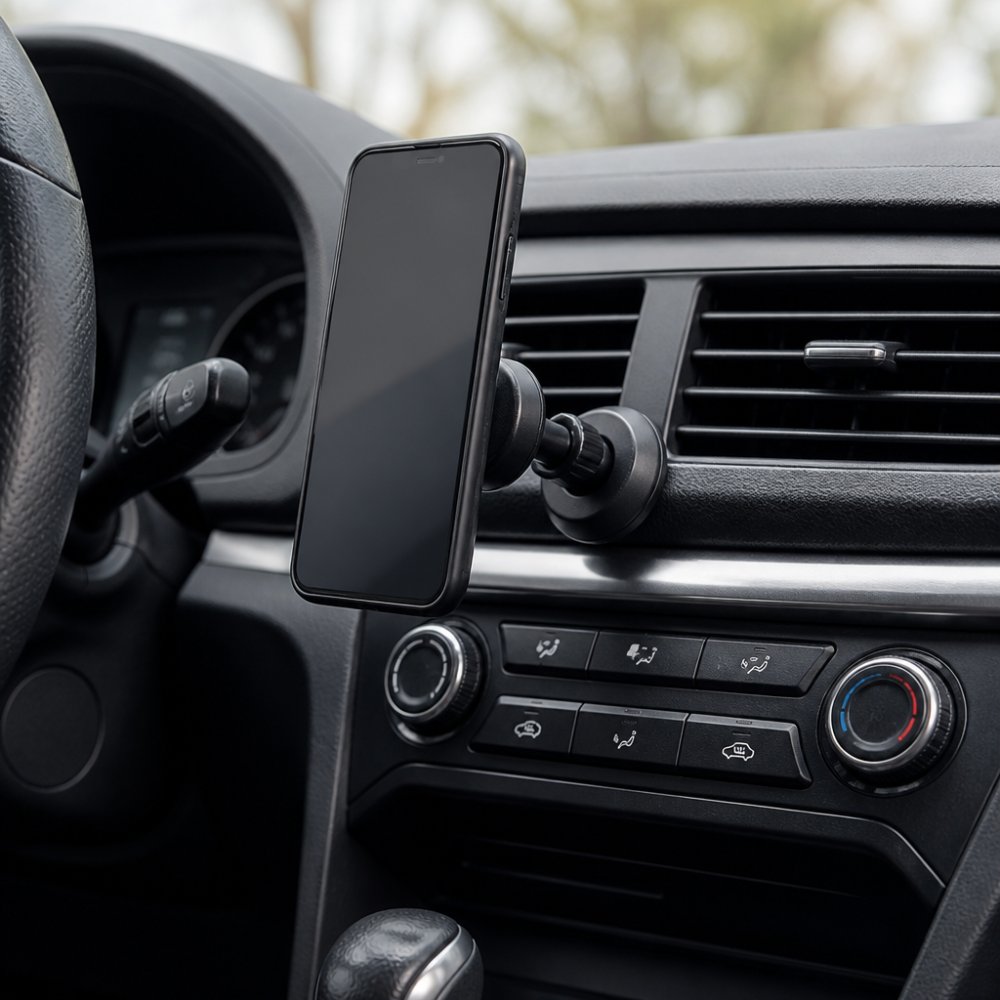
Magnetic mounts use metal plates attached to your phone and a magnetic holder in the car. This system eliminates the need for a cradle or clamp, offering simplicity and flexibility. The phone can be quickly removed and reattached, making it ideal for drivers who frequently move their phone between the car and other locations.
Magnetic mounts avoid vent obstruction entirely because they don't rely on vent pressure or airflow interference. They can be placed on any smooth surface: dashboard, windshield, seat rail, or console. The magnetic connection is strong enough to hold phones securely during normal driving.
One consideration: metal plates attached to phones may interfere with wireless charging on some models. Modern MagSafe-compatible phones are designed to work with magnetic accessories without charging issues, but older phones or non-MagSafe devices may experience reduced charging efficiency.
Ball Joint Rotation and Telescopic Arm Adjustment
Ball joint mounts use a spherical connection point that allows 360-degree rotation. This design lets you adjust the phone's angle and orientation without removing it from the mount. Telescopic arms extend or retract to position the phone at different distances from your body, useful for drivers of different heights or for switching between phones of different sizes.
The combination of ball joint rotation and telescopic extension provides maximum flexibility. You can position the phone exactly where you need it for your driving style, vehicle layout, and phone size.
Compatibility With Phone Cases and MagSafe Devices
Most magnetic mounts work with phone cases, though thick or metallic cases may reduce the magnetic grip. Test the magnetic connection before relying on it during driving. Thin silicone or plastic cases typically don't interfere with magnetic mounts.
MagSafe-compatible phones integrate magnetic rings into the phone design, offering stronger magnetic connections with MagSafe accessories, including car mounts. If you use a phone case with a MagSafe mount, ensure the case is MagSafe-compatible.
CarNook's magnetic phone mount options, such as the CarNook™ MagClip Phone Holder, are designed for universal compatibility and work with most phone cases. The product is compatible with standard cases and MagSafe devices, making it a reliable choice for drivers who want flexibility without worrying about case interference.

Alternative Mounting Locations: Console and Cup Holder Adapters
Beyond dashboard and seat rail mounts, the center console and cup holders offer viable mounting locations. Console mounts place the phone near the gear shift, providing easy access without obstructing the windshield. Cup holder adapters fit into existing cup holders, using the same space designed for beverage containers.
Console mounts work well for drivers who prioritize accessibility over windshield visibility. The phone sits lower, reducing distraction and glare. Cup holder adapters maximize existing vehicle features without sacrificing beverage storage. Both solutions avoid vent obstruction entirely and don't require adhesive or suction cups.
Hands-Free Driving Safety and Distracted Driving Prevention
Phone mounting serves a critical safety function: enabling hands-free operation. When a phone is properly secured, drivers can use voice commands for navigation, calls, and messaging without taking their hands off the wheel. This reduces cognitive and manual distraction, both contributors to accidents.
Proper positioning is essential for safety. A mount positioned too low or too far to the side increases the time drivers spend looking away from the road. A well-positioned phone mount keeps the screen in the driver's peripheral vision, reducing head movement and eye-off-road duration.
Voice-activated navigation and hands-free calling are most effective when the phone is mounted securely and positioned consistently. Legal considerations also matter. Many jurisdictions restrict phone use while driving, with exceptions for hands-free operation. A properly mounted phone that enables voice commands helps drivers comply with local regulations while maintaining safety.
Common Mistakes to Avoid When Mounting Your Phone
Blocking air vents intentionally is the most obvious mistake. Some drivers mount phones directly on vents, assuming the obstruction is minor. Over hours of driving, restricted airflow reduces cabin cooling efficiency. Additionally, the vent's airflow can gradually loosen the mount, causing it to shift or fall.
Using cheap suction cups for highway driving is a common failure point. Budget suction cups work adequately for short city drives but often fail during extended highway driving due to vibration and temperature changes.
Installing adhesive mounts without surface preparation reduces adhesive effectiveness. A clean, dry dashboard surface is essential. Clean the mounting surface with rubbing alcohol and allow it to dry completely to ensure a strong, lasting bond.
Choosing a mount that doesn't accommodate your phone case creates ongoing frustration. Verify that your chosen mount can grip your phone case securely before purchasing.
Mounting the phone where it obstructs your view of critical instruments or the road is dangerous. Test the position during a short drive to confirm that it doesn't interfere with your view of the road, speedometer, or warning lights.
Neglecting to secure the mount properly during installation leads to failure during driving. Follow the installation instructions completely. Allow adhesive time to cure, ensure suction cups are fully sealed, and tighten clamps securely.
Overloading the mount with a phone that's too heavy or large for its weight capacity can cause failure. Check the mount's specifications before purchasing if you use a larger device.
Conclusion
Mounting a phone securely in a car without blocking air vents is achievable with the right approach. Dashboard mounts with proper positioning, seat rail solutions for road trips, magnetic mounts for flexibility, and alternative locations like console or cup holder adapters each serve different driving needs.
The key is matching the mounting method to your vehicle layout, driving habits, and phone setup. A stable, well-positioned mount enhances safety by enabling hands-free operation while reducing distraction. Avoid common mistakes like vent obstruction, cheap suction cups, and improper installation to ensure your mount performs reliably.
For drivers seeking a reliable, versatile solution, the CarNook™ DashGrip Phone Mount combines dashboard stability with adjustable viewing angles, accommodating most phone sizes and cases. Whether you're commuting daily or embarking on a road trip, exploring CarNook's selection of car phone mounts and mounting accessories ensures you'll find a secure solution that keeps your phone accessible without compromising your vehicle's interior or airflow.
Frequently Asked Questions
Which car phone holder doesn't block the air vents?
Dashboard-mounted holders, seat rail mounts, and console adapters avoid blocking vents entirely. Magnetic mounts with ball joint rotation offer adjustability to position your phone away from vent slats. The best choice depends on your vehicle layout and driving style. Dashboard solutions like the CarNook DashGrip provide stable mounting without airflow obstruction, while magnetic options offer flexibility for repositioning.
Do car vent phone holders damage the vent?
Yes, vent-mounted holders can cause long-term interior damage. They apply pressure to delicate vent slats, potentially cracking plastic components and reducing heat dissipation efficiency. Repeated tension on vent mechanisms can loosen them permanently. Mounting your phone elsewhere—on the dashboard, seat rail, or console—eliminates this risk while preserving your vehicle's interior and maintaining proper airflow for climate control.
What's the safest place to mount a phone in your car?
Dashboard and seat rail mounts offer the safest placement. They keep your phone within your line of sight for hands-free navigation without requiring you to reach or look away from the road. These positions minimize distracted driving risks while providing stable, vibration-dampening support. Ensure the mount doesn't obstruct your view of traffic or instruments, and choose one with a secure grip and locking mechanism to prevent your phone from shifting during sudden stops or highway driving.
Can I use a magnetic phone mount with my existing phone case?
Most magnetic mounts work with standard phone cases, though metal cases or thick cases may reduce magnetic grip strength. If your case includes metal components, test the hold before relying on it during driving. For maximum compatibility and security, consider a case designed for magnetic mounting. Many drivers pair magnetic mounts with MagSafe-compatible cases to ensure reliable attachment and the ability to quickly remove or reposition their phone without losing the mounting capability.
This article was written using GrandRanker