


⚡ Free Express Shipping in USA✦
🔥 Newest Arrival Collection Live Now✦
✨ SUBSCRIBE TO GET YOUR 10% Off✦

Last Updated: October 14, 2026
When a phone slips off a cheap dashboard mount at 65 mph, the real cost goes beyond replacing the device. It's the split second of distraction, the fumbling to retrieve it, the moment your attention leaves the road. This is where premium car mounts separate themselves from budget alternatives, and why premium car mounts deserve consideration for your daily commute.
Premium car phone mounts deliver reliability that budget options struggle to match. The difference isn't always obvious at first glance, both hold a phone, both mount to a dashboard or windshield. But over months of daily use, through temperature swings and highway vibrations, the gap becomes clear. Premium mounts maintain their grip. Budget mounts gradually slip, slide, or fail entirely.

The question isn't whether you need a car phone mount. Most drivers do, for navigation, hands-free calls, and music control. The real question is whether the cheapest option will still be working reliably six months from now, or whether investing in a premium mount makes financial sense.
Budget mounts typically rely on basic adhesive bases, weak suction cups, or minimal clamping force. They work initially, but they have real limitations. The adhesive loses grip as temperature fluctuates. The suction cup degrades from repeated attachment and removal. The clamp arms apply uneven pressure, causing them to slip under vibration.
A common mistake is assuming all mounts function the same way. They don't. Budget designs often use cheaper materials that degrade faster under heat and UV exposure. The grip mechanisms, whether magnetic, adhesive, or mechanical, tend to weaken within weeks of regular use. This forces you to replace the mount sooner, turning what seemed like a savings into repeated expense.
Many users report that budget mounts work fine for light use but fail under real-world conditions: highway driving, hot weather, or frequent phone removal and reattachment. The phone may hold for a few months, then gradually work loose until it's unreliable.
Premium car phone mounts prioritize durability, stability, and consistent performance. They use stronger materials, better-engineered grip mechanisms, and design features specifically tested for long-term reliability. A premium mount typically maintains its holding force even after months of temperature changes and vibration exposure.
The engineering differences matter. Premium mounts often feature reinforced clamps with multiple contact points, ensuring even pressure distribution. Their adhesive bases use industrial-grade materials designed to withstand temperature extremes. Magnetic versions employ stronger rare-earth magnets that don't weaken over time. Suction-cup designs use precision engineering to maintain seal integrity through repeated use cycles.
Beyond raw durability, premium mounts often offer additional conveniences. Adjustable viewing angles let you position your phone exactly where you need it. One-handed attachment and removal save time during your commute. Better materials mean the mount won't rattle or vibrate against your dashboard, keeping the interior quiet and clean-looking.
A phone mount's primary job is keeping your device secure while your vehicle moves. Stability and vibration resistance directly impact whether your phone stays put during normal driving, highway speeds, or rough road conditions.
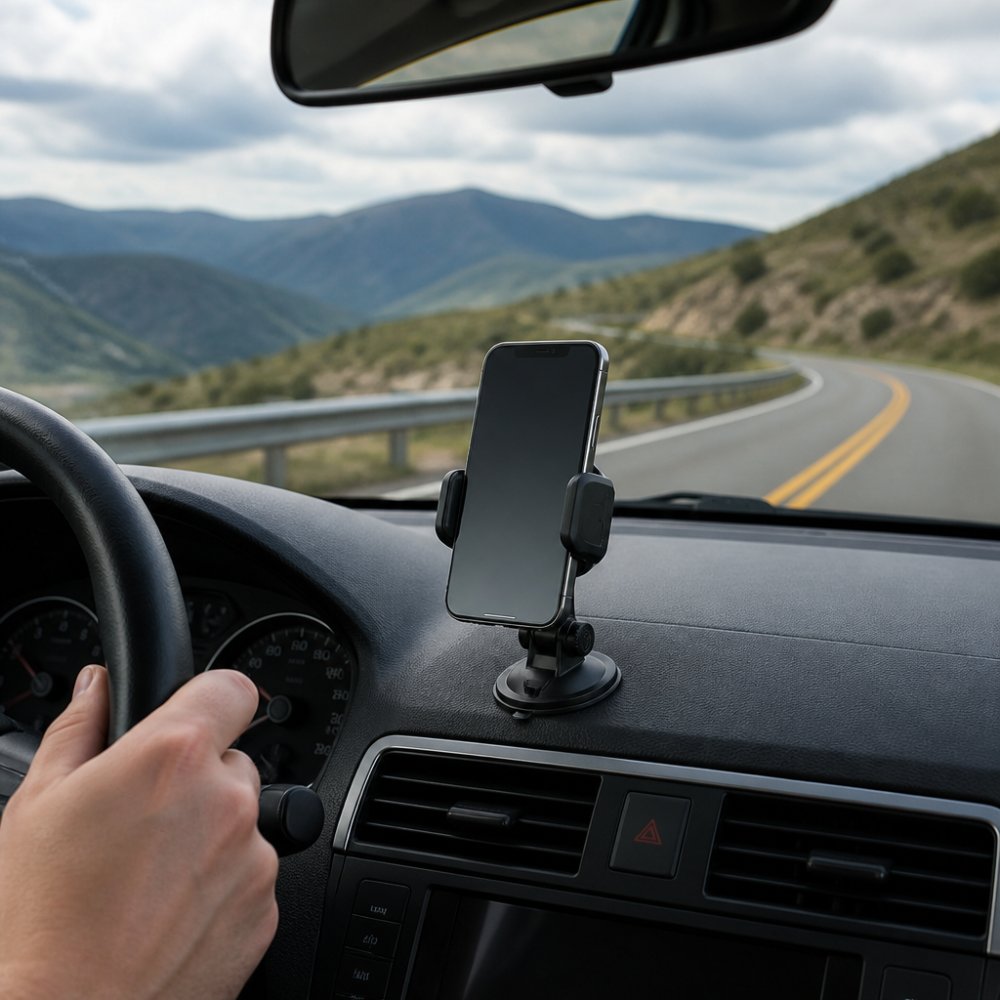
Budget mounts often vibrate noticeably, especially on highways or rough pavement. This vibration can loosen the grip over time, gradually working your phone loose. Premium mounts use damping materials and precision engineering to absorb vibration rather than transmit it. The result is a phone that stays locked in place, even on bumpy roads.
Stability also affects your safety. A phone that moves or vibrates in your peripheral vision creates distraction. A stable mount keeps your device exactly where you expect it, eliminating that source of cognitive load. Premium mounts also tend to position your phone more securely within your line of sight, reducing the need to look away from the road to check navigation or caller ID.
The difference becomes obvious during extended drives. Premium mounts maintain consistent grip throughout the journey. Budget mounts may slip slightly, requiring periodic readjustment. Over a long road trip, these small adjustments add up, and they pull your attention away from driving.
Selecting the right car phone mount depends on several practical factors: where you'll mount it, what phone you're using, how often you'll remove and reattach it, and whether you need additional features like wireless charging.

Different mounting positions offer different trade-offs. Dashboard mounts provide easy access and good visibility but may obstruct your view depending on dashboard design. Windshield mounts offer excellent sightlines and keep your dashboard clear, though some drivers find them less convenient for quick phone access. Vent mounts are compact and unobtrusive but work best in vehicles with accessible air vents.
Your vehicle type influences which position works best. Compact cars may have limited dashboard space, making a vent mount more practical. Larger vehicles offer more dashboard real estate for a stable dashboard mount. SUVs often benefit from windshield mounts that don't interfere with dashboard controls.
Consider your driving habits too. If you frequently remove your phone to take calls or check messages, choose a mount that makes one-handed removal easy. If your phone stays mounted the entire drive, stability becomes the primary concern.
Premium mounts are typically designed to work with many phone sizes and case types. Budget mounts often have more limited compatibility, requiring you to remove your case or use a specific phone model.
This matters because most people use phone cases for protection. A mount that requires case removal is inconvenient and defeats the purpose of having protective gear. Premium mounts accommodate most standard cases without requiring removal, saving you time and keeping your phone protected.
Magnetic mounts require compatible cases or metal plates, offering excellent grip and easy one-handed operation. Clamp-style mounts work with most cases but require more physical pressure to secure the phone. Suction-cup and adhesive mounts work universally but may have durability concerns with repeated attachment cycles.
A wireless charging car mount solves two problems simultaneously: securing your phone and keeping it powered during your drive. This combination is especially valuable for long commutes or road trips where your phone battery drains quickly from navigation and streaming.
The CarNook™ Wireless Charging Car Mount combines automatic clamping with up to 15W wireless charging, eliminating the need for a separate charging cable. This approach keeps your dashboard clean while ensuring your phone stays powered. The adjustable viewing position lets you position your device for optimal navigation visibility, and the strong suction-cup mounting provides stable, vibration-resistant holding.
Wireless charging mounts typically cost more than standard mounts, but the convenience justifies the investment if you drive frequently. No more fumbling with charging cables. No more worrying about battery drain during navigation-heavy drives. Your phone charges continuously while you drive.
Proper installation is critical to mount performance and longevity. A poorly installed mount fails faster and holds less securely, even if the mount itself is high-quality.
CarNook™ Wireless Charging Car Mount →
For suction-cup mounts, clean the mounting surface thoroughly with a microfiber cloth. Remove any dust, fingerprints, or residue that could compromise the seal. Attach the mount firmly, pressing evenly across the suction cup to ensure complete contact. Test the grip before relying on it with your phone.
For adhesive-based mounts, follow the manufacturer's instructions regarding surface preparation and curing time. Allow the adhesive to set fully before mounting your phone. Temperature and humidity can affect adhesion, so consider these factors when installing.
For vent-mounted options, ensure the clip grips the vent securely without damaging the vent slats. Test the grip by gently pulling on the mount before attaching your phone.
Regardless of mounting type, position your mount where it won't obstruct your view of the road, controls, or mirrors. The ideal position keeps your phone within your natural sightline, minimizing the need to look away from the road.
Most roundups tell you a premium mount "lasts longer" and stop there. That's not useful when you're standing in the checkout aisle. What actually answers the keyword is a way to evaluate durability yourself and a way to compare cost over time. Here's a framework you can run without a lab.
You don't need special equipment to see whether a mount is built to last. You need a repeatable routine and a notebook. Try this:
A mount that holds its position and grip through that routine is doing what you expect. A mount that needs readjustment every few days is telling you something. The point isn't to declare a universal winner, it's to see how each mount behaves in your vehicle and climate, which is what actually determines whether the premium price pays off.
Durability usually shows up in the details, not the marketing copy:
Instead of guessing, do the arithmetic for your own situation:
If a budget mount costs less up front but you replace it more often, its cost per year can end up higher than a premium mount you keep for several years. Run the numbers with your own replacement history, how often have you actually replaced a mount in the past?
Then add the costs that don't show up on the price tag:
If a premium mount's cost per year is close to or below what you're already spending on replacements, the value case is straightforward. If it isn't, a well-reviewed budget mount may be the better fit for how you drive.
For a mount built around long-term durability and stable positioning, explore CarNook's car phone mounts and compare the DashGrip, MagClip, and Wireless Charging options against the checklist above.

Mount position is the part of this decision that no product roundup can make for you, because it depends on your dashboard, your height, your state's rules, and how you actually use your phone. Here's how to think it through position by position.
This is the safety point most articles skip. Modern vehicles have airbags in the dashboard, the steering wheel, the seats, and often the side pillars. A mount placed over or near an airbag deployment zone can become a projectile if that airbag fires, and it can also interfere with the airbag doing its job.
Before you install, check your owner's manual for airbag locations. Avoid mounting anything directly over a dashboard airbag panel, and keep the mount and phone clear of the side-curtain airbag path along the pillars and roofline. If you're unsure where the zones are, your dealer or the manual is the right source, not a guess.
Distracted-driving and windshield-obstruction laws vary widely by state, and some cities add their own rules on top. Common patterns include restrictions on what can be attached to the windshield, limits on how much of the windshield can be obstructed, and outright bans on handheld phone use while driving. Because these rules change and differ by jurisdiction, check your state's current driver handbook or motor vehicle department before you settle on a position. A mount that's perfectly legal in one state may not be in another.
Even a well-placed mount only helps if you use it hands-free. Set your destination, start your navigation, and queue your music or podcast before you put the car in gear. Once you're moving, rely on voice commands and steering-wheel controls rather than reaching for the screen. The goal is a mount position that lets you glance at navigation with a quick eye movement, not one that invites you to tap and scroll while driving.
Mount choice also affects your interior. Suction-cup and adhesive mounts are removable but can leave residue or lift finish if removed carelessly, so follow the manufacturer's removal instructions. Vent mounts leave no residue but can stress vent slats over time. If preserving your dashboard matters to you, look for mounts with a removable base or a protective pad, and check whether replacement adhesive is available.
If you want a mount with adjustable positioning so you can fine-tune the angle for your vehicle, browse CarNook's car phone mounts and look for options that fit your dashboard layout and driving habits.
Premium car mounts typically feature stronger grip mechanisms, better vibration dampening, higher-quality materials, and more durable construction. They maintain their hold over time, resist heat and temperature changes, and often include features like adjustable viewing angles and easier installation. Budget mounts may slip, lose grip, or fail after months of use, especially in hot weather or on rough roads.
A wireless charging car mount can be worth it if you use navigation frequently and want to keep your phone powered during long drives. It eliminates the need for separate charging cables and reduces dashboard clutter. However, charging speed depends on your device and power source. Consider whether you already have a phone case, as some cases may affect wireless charging efficiency.
Look for mounts with strong grip strength, secure mounting bases (suction cups or adhesive), and materials designed to resist vibration. Premium mounts often use automatic clamping, reinforced gripping pads, or magnetic holds. Test stability by checking customer feedback about performance on highways and rough terrain. Proper installation and following manufacturer instructions are equally important for long-term security.
Many premium mounts work with standard phone cases, but compatibility depends on case thickness and material. Magnetic mounts require cases to be compatible with magnetic attachment. Clamp-style mounts work with most cases as long as they're not too thick or have unusual shapes. Check the mount's specifications and case compatibility before purchasing to avoid needing to buy a new case.

