


⚡ Free Express Shipping in USA✦
🔥 Newest Arrival Collection Live Now✦
✨ SUBSCRIBE TO GET YOUR 10% Off✦

Last Updated: October 10, 2026
Travel by car demands more than just a full tank and a destination, and learning how to organize car essentials for travel sets the tone for the entire journey.
The difference between a scrambled glove box and a functional system becomes obvious within the first hour on the road. When snacks, first-aid supplies, charging cables, and emergency gear are scattered across the car, drivers waste time searching, distract themselves while navigating, and risk items shifting during turns or sudden stops.
CarNook Co. specializes in practical travel accessories designed to simplify exactly this challenge. From securing your phone while driving to managing cables and keeping essentials organized, the right approach to car organization makes travel more enjoyable and less stressful.
Creating a comprehensive car travel essentials checklist starts with understanding what you actually need, which depends on trip length, destination, season, vehicle type, and passenger needs. A day trip in a sedan requires different preparation than a weekend getaway in an SUV with children, which differs again from a multi-day road trip across states in a minivan. Rather than a one-size-fits-all list, think of your checklist as a modular system where you add or remove categories based on your specific situation.
Day trips demand a minimal but strategic set of items. Keep a small tote bag or organizer in your car with water bottles, a basic first-aid kit (bandages, pain reliever, antihistamine), sunscreen, and a phone charger. Include a flashlight with extra batteries, jumper cables or a portable power bank for your phone, and a basic multi-tool. Sunglasses, a hat, and a light jacket handle unexpected weather shifts. A phone mount keeps your device accessible for GPS navigation without creating a distraction or safety hazard.
For day trips, your car organization strategy can be simple: one well-stocked bag in the trunk, essentials in the glove box, and a phone mount on the dashboard. The goal is accessibility without clutter.
Weekend getaways add layers to your car travel essentials checklist. Beyond day-trip basics, pack a change of clothes, toiletries, medications, and a larger first-aid kit. Include snacks, reusable water bottles, and a small cooler if you're bringing perishable food. Add a phone charger and a car charger, a retractable multi-port car charger can keep multiple devices powered without tangled cables cluttering your console.

Include a blanket or sleeping bag (useful for unexpected naps or outdoor activities), a basic tool kit, a tire pressure gauge, and emergency supplies like flares or reflective triangles. Organize these into labeled storage bins or a hanging organizer so items don't roll around during turns.
Multi-day road trips require the most comprehensive car organization approach. Start with everything from weekend getaways, then add: extra clothing for various weather conditions, a larger first-aid kit, prescription medications, toiletries, entertainment (books, headphones, travel games), and comfort items like neck pillows. Pack a cooler with drinks and snacks, along with reusable containers for leftovers. Include a portable tire inflator to manage unexpected tire pressure issues on longer drives.
Add emergency supplies including jumper cables, a multi-tool, basic wrenches, spare fuses, and a flashlight. Organize by category: food and drinks in one area, emergency supplies in another, clothing in a third. This separation prevents rummaging and keeps the car functional.
Seasonal conditions significantly change what you need to carry. For winter travel, add blankets, extra layers, hand warmers, a small shovel or sand for traction, and windshield washer fluid rated for freezing temperatures. Include extra first-aid supplies for dry skin and chapped lips.
For summer travel, prioritize cooling and sun protection: extra sunscreen, a wide-brimmed hat, lightweight clothing, and a small portable fan if your vehicle lacks strong air conditioning. Include electrolyte drinks or coconut water alongside plain water. Keep medications in an insulated bag rather than the trunk, where heat can degrade them.
Spring and fall trips fall between these extremes, but don't skip seasonal adjustments. Spring allergies may require extra antihistamines and tissues. Fall weather swings demand layering options and a heavier blanket.
Your vehicle's layout and cargo capacity shape how you organize and what you can realistically carry. Sedans and compact cars have limited trunk space, so prioritize vertical storage with stackable bins and hanging organizers.
SUVs and crossovers offer more flexibility with larger trunks and often a third-row option. You can dedicate zones more clearly: one section for emergency supplies, another for food, a third for clothing.
Minivans provide the most cargo flexibility with sliding doors, removable seats, and flat-floor designs. You can create distinct zones more easily and access items from multiple angles.
Pickup trucks require weatherproof storage solutions since the bed is exposed. Use lockable toolboxes or bed covers to protect items from rain, dust, and theft.
Traveling with children, elderly passengers, or pets changes your essentials list. Children require entertainment supplies, snacks they enjoy, extra water, and a more accessible first-aid kit for minor injuries.
If you're traveling with elderly passengers or anyone with mobility limitations, ensure that frequently needed items (medications, tissues, water) are within arm's reach without requiring them to lean or stretch. Keep a small cushion or lumbar support accessible for comfort on long drives.
Pets need water bowls, food, waste bags, and comfort items. Store pet supplies separately from human food to maintain hygiene. Include a pet first-aid kit with any medications your pet requires.
Passengers with specific medical needs, such as those requiring frequent bathroom access, temperature regulation, or sensory accommodations, may need additional supplies or seating arrangements.
Effective car organization for road trips relies on creating distinct zones. The trunk becomes your primary storage area, reserve the back half for large items like coolers, luggage, and emergency equipment.
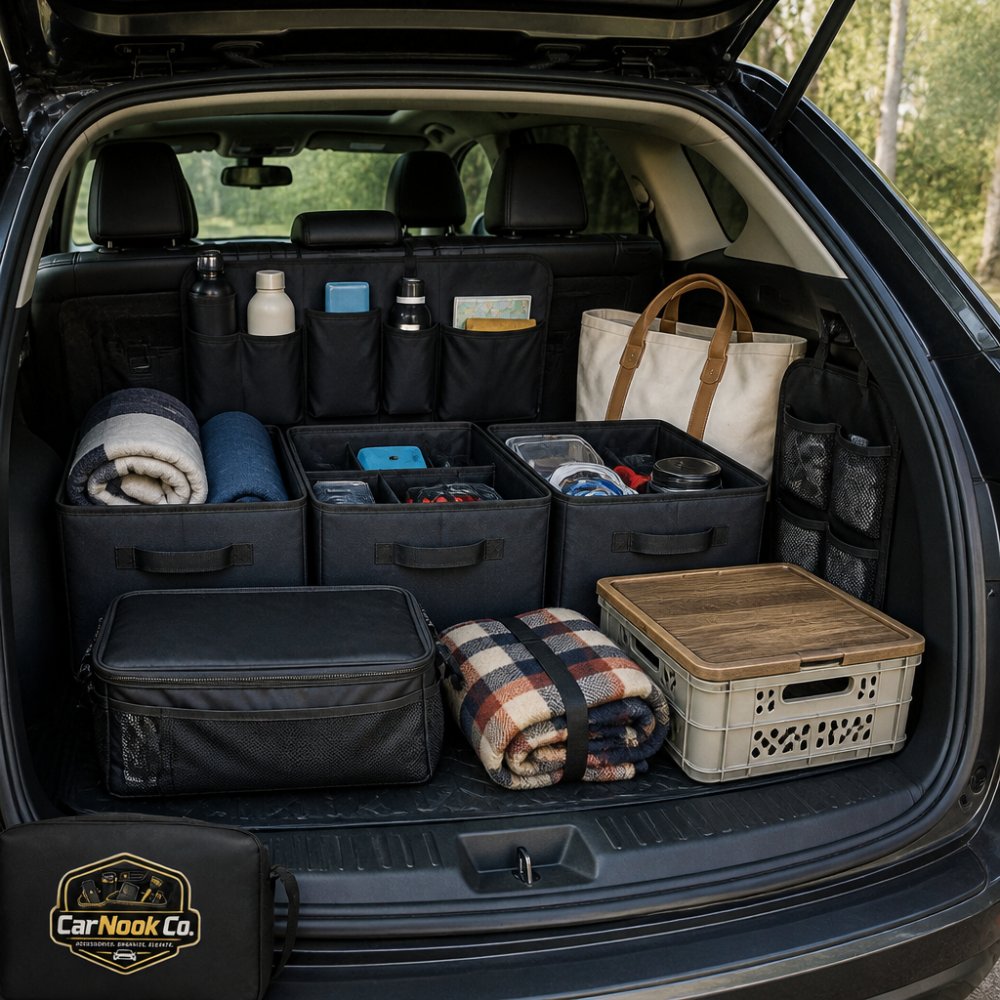
The back seat works for passenger comfort and secondary storage. Use hanging organizers on the back of front seats to store entertainment, tissues, and small supplies.
Front cup holders and the center console hold drinks and immediate snacks. A phone mount on the dashboard keeps your device visible for navigation without creating a hazard.
This zone-based strategy ensures that everything has a designated place. When someone asks for a tissue, you know exactly where it is. When you need to access emergency supplies, they're not buried under vacation luggage.
Storage containers and bags form the backbone of car organization for road trips. Hard plastic bins with secure lids protect items from shifting during acceleration, braking, and turns.
Tote bags work well for soft items like clothing and blankets. They're flexible, stackable, and easy to remove from the car.
For electronics and cords, a dedicated cable organizer prevents tangling.
Coolers keep food and drinks at safe temperatures. Insulated bags work for shorter trips. Reusable water bottles reduce waste and keep hydration accessible throughout the drive.
Choose containers that fit your vehicle's dimensions. Measure your trunk space and select bins that stack efficiently without wasting room. Avoid overstuffing, a well-organized car leaves space for movement and emergency access.
Packing for a road trip follows a logical sequence that prevents forgotten items and maximizes space efficiency.
Step 2: Gather all items in one location. Before loading your car, assemble everything in your home.
Step 3: Pack by frequency of use. Items you'll need during the drive, phone chargers, snacks, water, sunglasses, go in easily accessible locations.
Step 4: Use containers strategically. Pack similar items together in labeled bins. Keep a first-aid kit separate from tools.
Step 5: Load the car methodically. Start with the heaviest items in the back of the trunk, against the rear bumper.
Step 6: Secure everything. Use bungee cords or cargo nets to prevent items from shifting during driving.
Step 7: Do a final check. Walk around the car.
Accessibility means being able to reach what you need without stopping the car or taking your eyes off the road.
Keep your phone mounted securely, a wireless charging car mount like the CarNook™ Wireless Charging Car Mount keeps your device powered and visible for navigation.
Store snacks and drinks where passengers can access them without leaning into the trunk or driver's area. Keep tissues, hand sanitizer, and wet wipes within arm's reach.
Ensure first-aid supplies are easy to find but not so visible that they shift during driving. A clearly labeled bin in the back seat works well.
Keep medications in a cool, accessible location. Never store medications in direct sunlight or in a trunk that gets extremely hot.
A car emergency kit essentials collection keeps you prepared for unexpected situations without adding excessive weight or bulk. Include a flashlight with extra batteries, jumper cables, a basic multi-tool, a tire pressure gauge, and a portable tire inflator like the CarNook™ Portable Wireless Tire Inflator.

Include road flares or reflective triangles to alert other drivers if you break down. Pack a blanket for warmth or to use under your vehicle while working on it.
Store these items in a clearly labeled bin that's easy to locate but not in the way of daily driving. Check your emergency kit at least twice yearly to replace expired items and verify that batteries still work.
Food and beverages require thoughtful organization to stay accessible, safe, and fresh throughout your trip. Use a cooler with ice packs for perishable items.
Organize snacks into small containers or bags so passengers can grab items without creating a mess. Keep wet wipes or hand sanitizer nearby for cleaning hands before eating. Store trash bags in accessible locations so wrappers don't accumulate.
For longer trips, plan meals at rest stops rather than trying to eat while driving. This reduces distractions and keeps your car cleaner.
Keep drinks in cup holders or secured in a small bin. Spilled drinks create damage, stains, and distractions. Ensure all food containers have secure lids to prevent spills during sharp turns or sudden braking.
Electronics and charging cables create clutter faster than almost anything else in a car. Start by consolidating chargers. The CarNook™ 4-in-1 Retractable Fast Car Charger combines multiple charging connections in one compact device.
CarNook™ 4-in-1 Retractable Fast Car Charger →
Use cable organizers or small pouches to keep remaining cords contained. Label each cable so you know what it connects to.
Mount your phone securely using a phone mount that keeps your device visible and accessible without creating a distraction.
Keep headphones in a dedicated pouch. Store power banks in an accessible location with clear labeling.
Create a "charging station" in your vehicle, a designated area where all electronics and charging equipment live. This prevents cables from spreading throughout the car and makes it easy to locate what you need.
The glove box serves as your car's command center for documents and small essentials. Store your vehicle registration, insurance information, and driver's license in a small folder or envelope.
Add small items: pain relievers, antihistamines, lip balm, and sunscreen. Store tire pressure gauges, fuses, and small tools in a labeled container.

Keep the glove box organized with dividers or small bins. This prevents items from shifting and makes everything findable in the dark or during stressful situations.
Door pockets work well for maps, sunglasses, and items you access frequently. Keep them organized so you can find items without searching.
Avoid using small spaces as catch-all areas. Everything stored there should have a purpose and a reason for being in that specific location. Regular maintenance keeps small spaces functional.
Organization isn't a one-time project, it requires regular maintenance to stay effective and ensure supplies are usable when you need them. Without a maintenance routine, emergency supplies expire, chargers stop working, and your system gradually devolves into the chaos you started with.
After every trip, spend 15 minutes restoring your car to baseline condition. Remove items that don't belong in your vehicle, souvenirs, receipts, empty containers. Consolidate partially used supplies: if you opened a first-aid kit and used a few bandages, restock it before the next trip.
Check that all containers have secure lids and that nothing is damaged or leaking. If a cooler has ice melt or a snack container has crumbs, clean it out immediately to prevent mold or pest issues. Return borrowed items to their proper locations.
Restock consumables: if you used half your water bottles, refill them. If snacks were depleted, replace them with fresh items. If you used pain relievers or antihistamines from your first-aid kit, add them back to the supply.
Once a month, conduct a focused inspection of your emergency and essential supplies.
First-aid kit: Check expiration dates on medications, ointments, and adhesive bandages. Replace anything that's expired or dried out.
Flashlight and batteries: Turn on your flashlight to confirm it works.
Jumper cables or portable power bank: Test that your jumper cables are in good condition with no frayed insulation.
Tire pressure gauge: Use it to check your tire pressure and confirm the gauge reads accurately.
Phone chargers and cables: Plug in each charger and cable to confirm they still work.
Emergency supplies: Check that flares or reflective triangles haven't been damaged or lost.
Create a simple checklist in your phone's notes app or print one for your glove box.
Before each season changes, update your car travel essentials for new weather conditions.
Before winter (October-November): Add heavier blankets, extra layers, hand warmers, and a small shovel or sand for traction. Swap lightweight sunscreen for lip balm and moisturizer.
Before spring (February-March): Remove heavy blankets and winter layers, but keep one lightweight blanket. Add allergy medications and extra tissues if you're prone to seasonal allergies.
Before summer (May-June): Remove heavy clothing and add lightweight, breathable options. Increase your sunscreen supply and add a wide-brimmed hat.
Before fall (August-September): Remove summer-specific items like extra sunscreen. Add layers for temperature swings. Include a heavier blanket again. Verify that your heating system works as temperatures drop.
Set phone reminders for the first day of each season to prompt your seasonal transition.
Before any major trip, whether it's a weekend getaway or a multi-week road trip, conduct a thorough pre-trip inspection.
Test electronics: Charge your phone fully and test your phone mount to confirm it's secure.
Check tire pressure: Use your tire pressure gauge to check all four tires and your spare (if accessible).
Inspect storage containers: Open each bin or bag and confirm contents are present, not damaged, and properly organized. Verify that lids close securely.
Test vehicle systems: Confirm that your air conditioning or heating works depending on the season.
Review your route: Confirm your destination address and planned route. Identify rest stops and gas stations along the way.
Create a pre-trip checklist specific to your vehicle and typical trips. Print it or save it to your phone.
Keep a simple inventory list noting what emergency supplies and essentials you carry and when they were last checked. This prevents forgotten items and ensures you know what's in your vehicle at all times.
You can maintain this in several ways:
Update your inventory after each seasonal transition and after any major trip where supplies were used. Include the date of the last inspection so you know when items were verified as functional.
If you carry medications or supplies specific to a passenger (such as an EpiPen, inhaler, or mobility aid), note these separately with expiration dates and verify them monthly. These items are critical and can't be forgotten.
Over time, storage containers crack, blankets fray, and cables wear out. Rather than waiting for items to fail, replace them proactively.
If a storage bin shows cracks or a lid no longer closes securely, replace it before the next trip. If a blanket is thinning or fraying, swap it for a new one.
Keep a running list of items that need replacement and address them during your seasonal transitions. This prevents you from discovering a broken item when you need it most.
A well-maintained organization system requires consistent attention but can contribute to reliability and peace of mind. By establishing post-trip routines, monthly inspections, seasonal transitions, and pre-trip verifications, you can help ensure that your car is ready for your journeys.
Your car travel essentials depend on trip length, but core items include water bottles, snacks, a first-aid kit, emergency supplies (flashlight, jumper cables, reflective triangles), phone chargers, navigation tools, weather-appropriate clothing, and basic tools. For longer trips, add entertainment, medications, hygiene supplies, and a tire inflator. Keep frequently needed items accessible in the front or center console, and store backup supplies in the trunk.
Use a zone-based strategy: keep navigation and phone accessories in the front (within arm's reach), snacks and drinks in a center console organizer, emergency supplies in an easily accessible trunk section, and clothing or blankets in a separate storage container. Label storage bins and use vertical space to avoid blocking visibility. Place heavier items low and toward the rear, and reserve the front seat area for items you'll need during driving.
Store all charging cables and adapters in a dedicated travel organizer or small pouch to prevent tangling. Keep your primary phone charger easily accessible in a cup holder or dashboard organizer. A multi-port car charger like the CarNook™ 4-in-1 Retractable Fast Car Charger can consolidate multiple charging needs into one compact device.
A car emergency kit should include a flashlight with extra batteries, jumper cables or a portable jump starter, reflective warning triangles, basic tools (wrench, screwdriver, pliers), a tire inflator, spare fuses, jumper cables, a first-aid kit, blanket, water, and non-perishable snacks. Consider adding a tire pressure monitoring system like the CarNook™ Smart Tire Pressure Monitoring System to catch tire issues before they become roadside emergencies.
Assign each family member a small storage bin or bag for personal items, snacks, and entertainment. Use hanging organizers on seat backs for kids' toys and activities. Keep a separate cooler for drinks and perishable snacks. Establish a 'command center' in the center console with maps, tissues, hand sanitizer, and sunscreen. Set a rule about where items belong, and do a quick 10-minute tidy-up at gas stops to maintain order throughout the trip.
Store items by frequency of use: immediate-access items (phone, wallet, navigation) go in the front cup holders or dashboard organizer; snacks and drinks in a center console tray or small cooler; emergency supplies in a trunk-mounted storage bin within arm's reach of the trunk opening; and seasonal items (blankets, jackets) in a back-seat storage container. Keep the driver's view clear and avoid placing items where they could shift during braking or turns.
Day trips require minimal essentials: phone charger, water, snacks, sunscreen, and a basic first-aid kit. Weekend trips add a change of clothes, toiletries, medications, and a tire inflator. Multi-day road trips require all of the above plus entertainment, weather-appropriate clothing for different conditions, backup chargers, more substantial food and beverages, detailed emergency supplies, and comfort items like pillows or blankets. Adjust storage needs based on trip duration and number of passengers.

