



Table of Contents
- Why Phone Mount Security Matters on Rugged Terrain
- Magnetic vs Clamp Phone Mount: Which Holds Better Off-Road
- How Magnetic Phone Mounts Perform on Bumpy Trails
- Case Compatibility and Magnetic Interference Issues
- Wireless Charging and Magnet Concerns for Your Phone
- Best Phone Mount for Off-Roading: What to Look For
- MagSafe Car Mount Off-Road: Real-World Performance
- Dashboard and Interior Damage: Long-Term Considerations
- Making the Right Choice for Your Adventure Vehicle
- Frequently Asked Questions
Last Updated: September 28, 2026
Why Phone Mount Security Matters on Rugged Terrain
When considering whether are magnetic phone mounts worth it for off-roading, it's important to understand that off-road driving demands a different approach to phone mounting than typical highway commuting. When a vehicle encounters potholes, uneven roads, and rough terrain, the forces acting on a phone mount intensify dramatically. A mount that works fine on smooth pavement may fail to keep a phone secure during trail riding or adventurous driving.
The stakes are real. A phone sliding loose during navigation means taking your eyes off the road at a critical moment. On rugged terrain where attention matters most, that distraction can create dangerous situations. Beyond safety, a phone that falls from a mount risks damage to both the device and the interior of the vehicle.
Are magnetic phone mounts worth it for off-roading? The answer depends on understanding how different mount types perform under stress, what compatibility challenges exist, and whether the trade-offs align with your specific driving conditions. This guide examines the real-world performance of magnetic mounts on bumpy trails, compares them to mechanical alternatives, and helps readers make an informed decision based on their vehicle and phone setup.

Magnetic vs Clamp Phone Mount: Which Holds Better Off-Road
Magnetic mounts and mechanical clamp mounts represent two fundamentally different approaches to phone retention. Each has strengths and limitations when facing the vibration and impact of off-road driving.
Magnetic mounts use metal plates attached to a phone or case, with magnets in the mount itself creating the holding force. The appeal is simplicity: one-handed attachment and removal, a low-profile design, and minimal mechanical parts that could wear out. For casual commuting, magnetic systems offer genuine convenience.
Mechanical clamps grip a phone physically using adjustable arms or paddles. These mounts don't rely on magnetism, so they work with any phone regardless of case material. The clamping force can be substantial and doesn't degrade over time the way magnetic strength can be affected by temperature or wear.
On bumpy trails, the performance difference becomes apparent. Clamp mounts distribute holding force across multiple contact points on the phone's edges or body. This multi-point grip resists vibration effectively because the phone is physically held in place. Magnetic mounts, by contrast, rely on a single attractive force pulling the phone toward the mount. Intense vibration can create micro-movements between the phone and the magnet, gradually loosening the connection.
Temperature also plays a role. Magnetic strength can vary with heat, particularly in vehicles exposed to direct sunlight on hot days. A mount that held perfectly in the morning might feel slightly looser by afternoon. Clamp mounts remain unaffected by temperature changes.
However, clamp mounts do have drawbacks for off-road use. They typically require two hands to secure a phone, making them less convenient during active driving. Some designs can obstruct parts of the phone screen. They also add bulk compared to the minimal profile of a magnetic mount.
The practical choice often comes down to priorities: if one-handed operation and minimal visual clutter matter most, magnetic systems can work if paired with a secure installation location and a compatible phone case. If maximum security during rough driving is the priority, mechanical clamps provide more reliable retention.

How Magnetic Phone Mounts Perform on Bumpy Trails
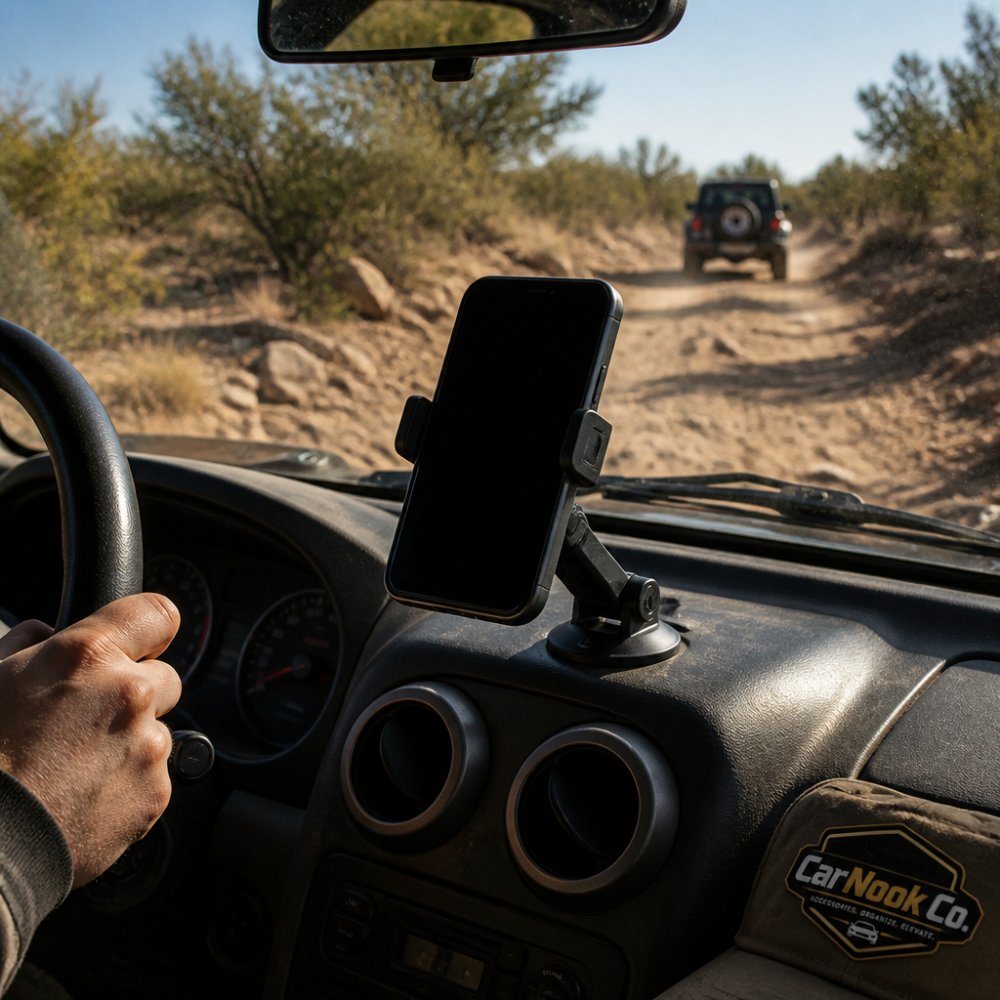
Real-world testing of magnetic mounts on uneven roads reveals both capabilities and limitations. A well-installed magnetic mount typically maintains grip during moderate vibration, such as highway driving with potholes or rough pavement. The phone stays in place, and the user can operate it with one hand.
Intense off-road conditions tell a different story. When a vehicle navigates rocky terrain, deep ruts, or washboard surfaces, vibration becomes relentless. Magnetic mounts can experience creep, a gradual shift of the phone's position within the mount. The phone might slide slightly downward, rotate, or tilt over several minutes of rough driving. This movement alone doesn't necessarily drop the phone, but it reduces visibility and increases the risk of dislodging.
The metal plate attachment method also matters. Plates glued to the back of a phone create a permanent modification. Plates embedded in a case offer better reversibility but add thickness, which can affect how the phone sits in the mount. Thicker cases sometimes reduce magnetic contact area, weakening the hold.
Several factors influence magnetic mount performance on rough terrain:
- Mount installation location: A mount positioned on the dashboard experiences less vibration than one on the windshield. Dashboard mounts benefit from the vehicle's structural mass below them.
- Phone case material: Metal cases can interfere with magnetic attraction. Thick plastic or silicone cases may distance the phone slightly from the magnet, reducing holding force.
- Magnet strength: Stronger magnets hold more securely but can make attachment and removal difficult, particularly with one hand.
- Road surface consistency: A phone might hold perfectly on gravel roads yet shift on washboard surfaces where vibration frequency matches the resonance of the mount itself.
For off-roading specifically, magnetic mounts perform adequately on moderate trails but show limitations on highly technical terrain. A backup strategy, such as a phone tether or a secondary securing method, reduces risk if a magnetic mount is the chosen solution.

Case Compatibility and Magnetic Interference Issues
One of the most overlooked challenges with magnetic phone mounts involves case compatibility. Many users already own a phone case they prefer, one that fits their aesthetic, offers the protection level they want, or includes features like a wallet pocket or stand functionality. Adding a magnetic mount often requires either purchasing a new case or modifying an existing one.
Metal cases present a direct problem. Aluminum, steel, or metal-reinforced cases can shield the phone from magnetic attraction or create competing magnetic fields that disrupt the mount's hold. A phone in a metal case might feel secure initially but lose grip during vibration because the metal case interrupts the magnetic connection.
Magnetic plates on the phone itself bypass the case problem but create their own issues. A metal plate glued to the back of a phone is permanent. If the user later switches phones or decides against magnetic mounting, the plate remains. Additionally, metal plates can interfere with wireless charging and can affect signal strength in some situations.
Thick cases reduce holding force. Even non-metallic cases that are very thick, often protective cases designed for rugged use, can distance the phone far enough from the magnet that attraction weakens noticeably. A case that's 3-4 millimeters thick may reduce magnetic hold by 20-30 percent compared to a thinner case, depending on the magnet strength.
Case-integrated magnetic systems exist as a middle ground. Some cases have built-in metal plates or magnetic materials designed to work with magnetic mounts. These eliminate the need for a separate plate on the phone and maintain case compatibility. However, they work only with that specific case, limiting flexibility if the user wants to switch cases. Exploring MagSafe Accessories and compatible Phone Cases can help identify options that work together seamlessly.
For off-roading, case compatibility becomes critical because protective cases are often necessary. A rugged case that protects a phone during a fall from a vehicle is important insurance, but that same case might weaken a magnetic mount's grip. Testing a magnetic mount with the specific case being used is essential before relying on it during technical driving.
Wireless Charging and Magnet Concerns for Your Phone
A common concern among smartphone users involves potential interference between magnetic mounts and wireless charging. The two technologies operate on different principles, but they can interact in ways that affect functionality.
Wireless charging and magnets: Wireless charging uses electromagnetic induction, creating a magnetic field to transfer power to a phone's receiver coil. A strong permanent magnet mounted nearby can theoretically interfere with this field. In practice, most modern phones and wireless chargers are designed with shielding that minimizes this issue. However, the strength of the magnet and the proximity to the charging coil matter.
Phones with wireless charging should be tested with a specific magnetic mount before assuming compatibility. Some users report that certain magnetic mounts slightly reduce charging speed or require repositioning the phone for charging to initiate. Others notice no effect whatsoever. The variation depends on the phone model, the charger design, and the magnet strength of the mount.
Magnet effects on phone hardware: Permanent magnets in phone mounts don't damage phone batteries, processors, or storage. Modern smartphone components are engineered to resist magnetic fields. However, strong magnets can affect:
- Compass functionality: The phone's digital compass may give inaccurate readings if a strong magnet is very close. This matters for navigation apps that rely on compass accuracy.
- Hall effect sensors: Some phones use magnetic sensors for features like auto-rotating the screen when a case flips. A nearby magnet might trigger these sensors unintentionally.
- Charging coil position: On phones with wireless charging, the coil's exact position relative to a magnetic mount can affect charging efficiency.
For off-roading use, compass accuracy can be important if navigation relies partly on directional information. Testing the phone's compass app with the magnetic mount in place ensures the feature works reliably before depending on it during trail riding.
The risk of permanent damage from a magnetic phone mount is minimal with modern phones. The concern is more about temporary interference with specific features. Users who rely heavily on wireless charging or compass navigation should test their specific phone-mount combination before committing to a magnetic mount for off-road driving.
Best Phone Mount for Off-Roading: What to Look For
Selecting a phone mount for off-roading requires evaluating several criteria that matter more on rough terrain than they do for regular driving.
Vibration resistance stands at the top of the list. A mount that minimizes vibration transmission to the phone reduces fatigue on the device and keeps it more stable visually. Mounts with damping materials or flexible joints between the arm and the base perform better than rigid designs.
Secure hold regardless of phone case matters because off-road drivers often use protective cases. A mount should work reliably with thick, rugged cases without requiring case modification or replacement. Mechanical clamps generally excel here, while magnetic mounts require testing with the specific case in use.
Low-profile design keeps the dashboard or windshield uncluttered and reduces wind noise. A bulky mount occupies more visual space and can obstruct the driver's view. Magnetic mounts typically score well on this criterion.
CarNook™ SecureRide Phone Mount →
One-handed operation is convenient during active driving, though less critical for off-road use where the vehicle moves slower and the driver can take a moment to adjust the phone. Magnetic mounts offer this advantage; clamp mounts usually require two hands.
Durable materials that resist heat, UV exposure, and vibration are essential. A mount that loosens or cracks after a season of use becomes unreliable. Aluminum or reinforced plastic bodies with quality fasteners perform better than cheap materials.
Mounting location flexibility matters because optimal placement varies by vehicle. A mount should work on a dashboard, windshield, vent, or other locations depending on the vehicle layout and the driver's preference.
Cable management is worth considering if the phone will be charging while mounted. A mount that accommodates a charging cable without creating a tangle reduces distraction.
For off-roading specifically, prioritize vibration resistance and secure hold over convenience features. A mount that keeps a phone absolutely stable during rough driving is more valuable than one that's marginally faster to attach.
MagSafe Car Mount Off-Road: Real-World Performance
MagSafe technology, introduced by Apple and adopted by other manufacturers, offers a standardized approach to magnetic mounting. MagSafe-compatible mounts and phones are engineered to work together, theoretically offering better reliability than generic magnetic mounts.
In practice, MagSafe systems perform similarly to high-quality magnetic mounts on moderate terrain. The standardization means the magnet strength and attachment method are consistent, reducing the variability that comes with aftermarket magnetic plates. A phone with built-in MagSafe support (or a MagSafe-compatible case) works with any MagSafe-certified mount without modification.
On bumpy trails, MagSafe systems show the same limitations as other magnetic mounts: creep during intense vibration and potential loosening if the phone case is very thick. The standardization doesn't eliminate the fundamental physics of magnetic retention under stress.
One advantage of MagSafe is the ecosystem of compatible accessories. A MagSafe mount works with MagSafe Accessories, phone stands, and other attachments, offering flexibility. For users invested in the MagSafe ecosystem, this compatibility is valuable.
However, MagSafe mounts are typically more expensive than generic magnetic or mechanical clamp alternatives. The added cost reflects the engineering and licensing, but the off-road performance advantage over a quality magnetic mount is marginal.
For off-roading, a MagSafe system can work well if the user already owns a MagSafe-compatible phone and prefers the ecosystem. It's not a necessary upgrade over a well-designed mechanical clamp mount or a quality magnetic mount with a compatible case.
Dashboard and Interior Damage: Long-Term Considerations
A phone mount that stays in place is only part of the equation. The mount itself can affect the vehicle's interior over time, particularly on off-road vehicles where vibration and heat are more intense.
Adhesive mounts that use suction cups or adhesive pads can leave marks, residue, or damage to dashboards and windshields. Suction cups sometimes create permanent circles where they contact the glass. Adhesive pads can peel paint or leave sticky residue. Removing such a mount after months of use may reveal damage that's difficult to repair.
Mechanical clamps that grip the dashboard or vent slats can cause indentation or cracking over time, especially on plastic vents. The constant vibration of off-road driving amplifies this effect. A mount that feels secure initially might gradually loosen the vent structure, requiring replacement.
Magnetic mounts attached to a metal dashboard plate or ball mount can scratch or dent the dashboard during installation or removal. The weight of the phone pulling on the mount creates stress on the attachment point.
Heat buildup under a phone mount can discolor or warp plastic dashboards. A phone in direct sunlight, held against the dashboard by a mount, can reach temperatures that soften or degrade plastic surfaces over months of exposure.
Interior aesthetics matter to many drivers. A mount that's visible and bulky changes the look of the vehicle's interior. Off-road vehicles often benefit from a clean, minimalist appearance, and a large mount can detract from that.
To minimize long-term damage, consider:
- Protective padding under any mount that contacts the dashboard
- Removable installation methods rather than permanent adhesives
- Regular inspection of the dashboard or mounting surface for signs of damage
- Positioning the mount where it won't be in direct sunlight for extended periods
For off-road vehicles that see regular use, the cumulative effect of vibration and heat on interior surfaces is real. Selecting a mount design that minimizes contact stress and using protective measures extends the life of both the mount and the vehicle's interior.
Making the Right Choice for Your Adventure Vehicle
The decision to use a magnetic phone mount for off-roading ultimately depends on individual priorities, vehicle type, and driving conditions.
Magnetic mounts make sense if: the driver values one-handed operation, wants a minimal visual footprint, is willing to test the setup with their specific phone case before relying on it during serious off-roading, has a compatible phone case or is willing to purchase one, and doesn't depend heavily on wireless charging or compass navigation.
Mechanical clamps are preferable if: maximum security during intense vibration is the priority, the driver uses a thick protective case and wants to avoid compatibility testing, the vehicle interior matters aesthetically and the driver prefers minimal visual impact of the mount mechanism itself, or the driver wants a solution that works with any phone case without modification.
Hybrid approaches can work well. Some drivers use a magnetic mount for casual navigation during highway driving and switch to a mechanical clamp for technical off-road trails where security is paramount. Others use a magnetic mount in a vehicle used primarily for commuting and reserve a mechanical clamp for adventure vehicles used on rough terrain.
Testing a mount with the specific phone, case, and vehicle before committing to it during serious off-roading is the most reliable approach. A mount that feels secure during a test drive on smooth roads may behave differently on the actual terrain the vehicle will encounter.
For those seeking a practical, reliable option, Car Phone Mounts offer both magnetic and mechanical solutions designed for secure, hands-free operation. Whether prioritizing vibration resistance, case compatibility, or convenience, testing the mount with the actual phone and case before relying on it during serious trail riding ensures the setup performs when it matters most.
The right choice balances security, convenience, case compatibility, and the specific demands of the driving conditions the vehicle will face most often.
Frequently Asked Questions
Are magnetic phone mounts secure enough for bumpy trails?
Magnetic phone mounts can provide a secure hold on bumpy trails when properly installed and matched to your phone or case. The strength of the magnetic connection depends on the mount's magnet quality and the metal content in your phone or case. For off-roading, look for mounts with reinforced magnets and low-profile designs that minimize movement. One-handed attachment and removal make them convenient during trail rides, though vibration resistance varies by model and installation location.
Do magnetic phone mounts damage phones or interfere with wireless charging?
Modern smartphones and magnetic mounts are generally compatible, though interference depends on the magnet strength and your phone's design. Wireless charging can be affected if metal components or strong magnets are near the charging coil. To minimize risk, use MagSafe-compatible accessories designed for phones that support magnetic attachment, and test your wireless charging with the mount in place before relying on it during adventures. If you use a case, ensure it's compatible with both the mount and your charging setup.
What's the difference between magnetic and clamp mounts for off-roading?
Magnetic mounts offer quick one-handed operation and a low-profile design, making them convenient for frequent phone access. Clamp mounts provide mechanical grip without magnets, eliminating magnetic interference concerns. Clamp mounts can be heavier and more visible on your dashboard. For off-roading, magnetic mounts excel in vibration resistance when properly installed, while clamp mounts suit users concerned about magnetic effects on their devices or those with older phones lacking metal components.
Is MagSafe strong enough to hold a phone during rough off-road driving?
MagSafe-compatible mounts can deliver strong hold on rough terrain when installed correctly on a stable mounting point. Performance depends on the mount's design, your phone's MagSafe ring strength, and the case thickness. For off-roading, choose a low-profile mount positioned away from high-vibration areas like the center of the dashboard. Test the hold on actual trails before relying on it for critical navigation, and consider your phone's case compatibility to ensure the magnetic connection remains effective over time.